Shindo Distillery's first blend uses local barley
Shindo Distillery in Asakura, Fukuoka has released its first blended whisky, pairing its own malt with grain made from local barley, and won ISC gold before launch.
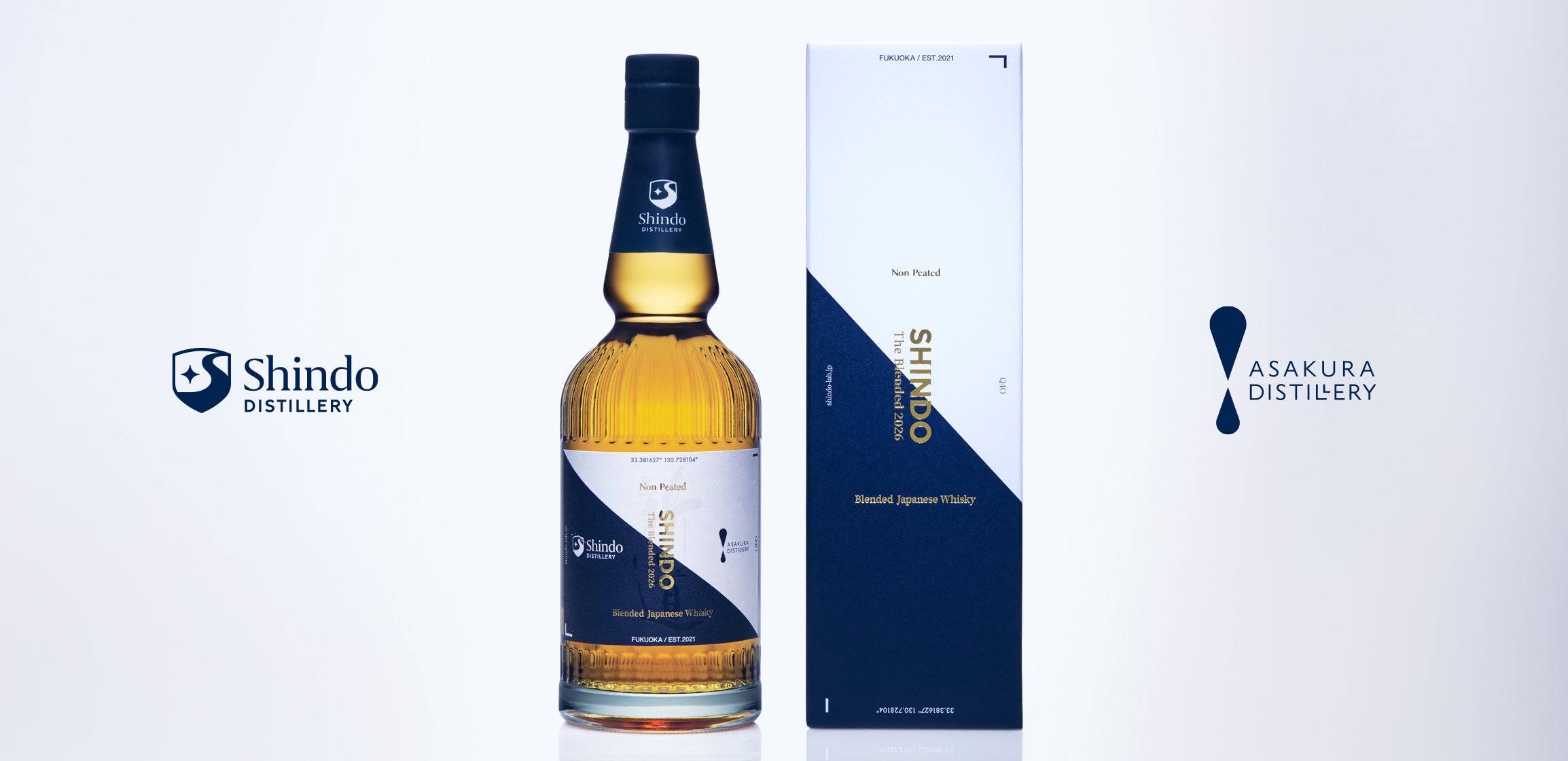
Shindo Distillery (SHINDO DISTILLERY) in Asakura, Fukuoka Prefecture, released its first-ever blended Japanese whisky, “SHINDO The Blended 2026 - Non Peated”, across Japan on 15 June 2026. The distillery is run by Shinozaki Co., Ltd., which has been making alcoholic drinks for 200 years. Before launch, the whisky won a gold medal at the International Spirits Challenge (ISC) 2026. Fukuoka Prefecture lies in the north of Kyushu island, in south-western Japan.
Malt and grain both made in-house, from local barley
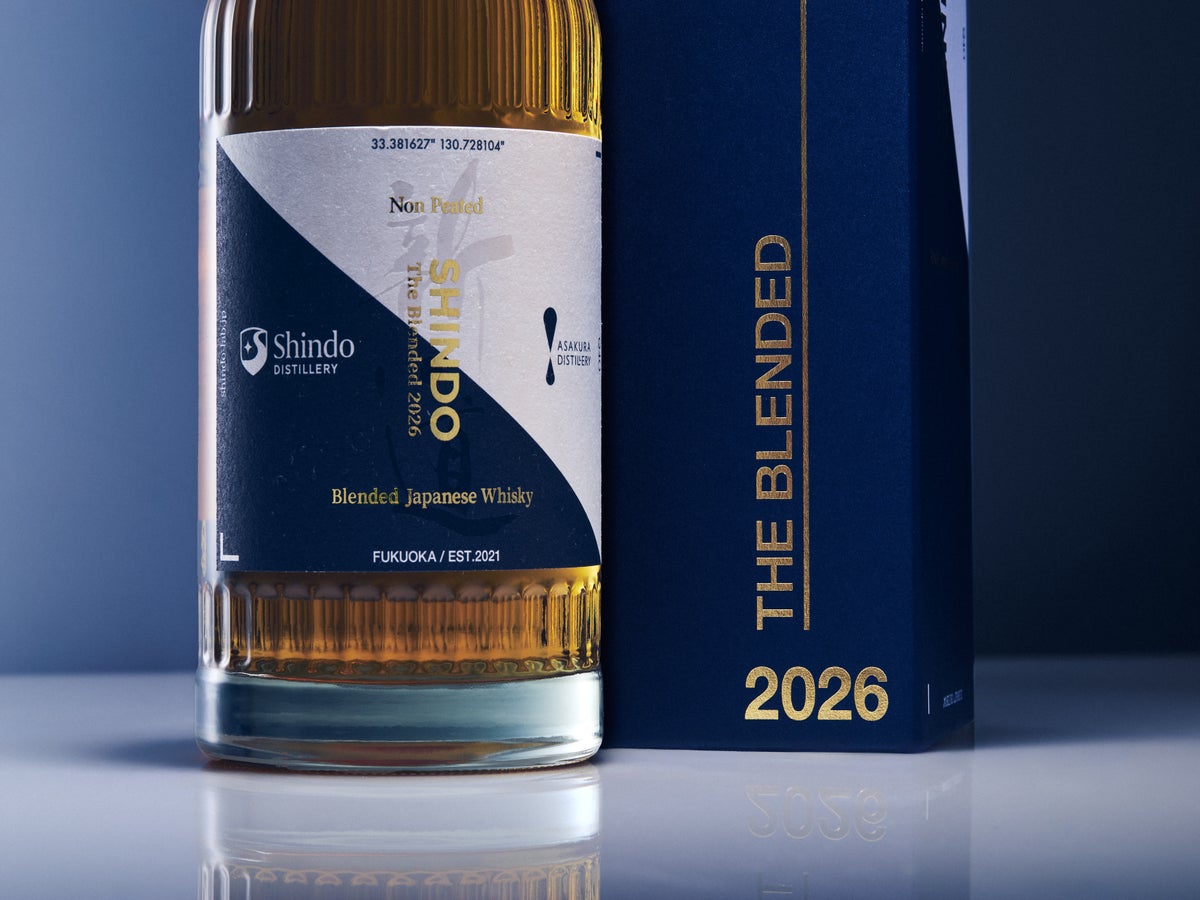
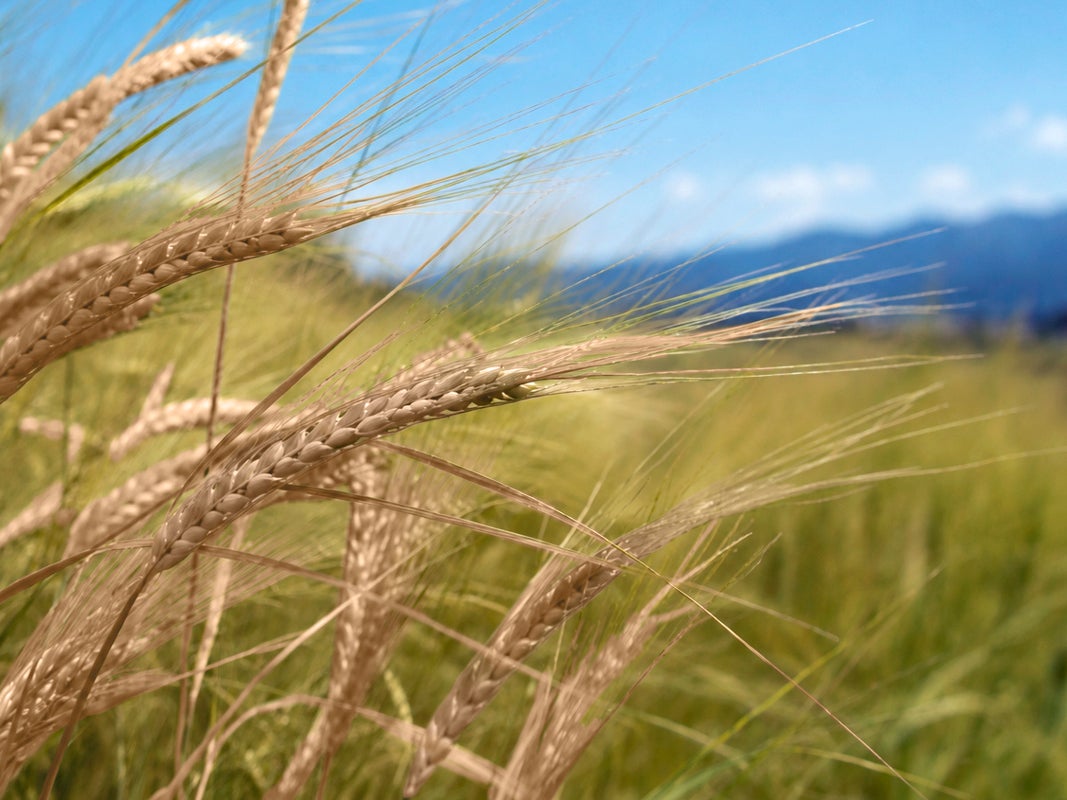
Blended whisky is a mixture of malt whisky, made solely from malted barley, and grain whisky, a lighter spirit made from cereals. For this new release, both component whiskies are produced by the same company. The malt comes from Shindo Distillery and the grain from the company’s Asakura Distillery, and the label carries the logos of both distilleries. The grain is made from “Haruka Nijo”, a two-row barley variety grown in Asakura. It is a variety recommended in northern Kyushu for shochu and beer production, with large grains that are less likely to crack during polishing. It is also said to ferment reliably and yield plenty of alcohol.
Two stills for lightness, and layers of casks
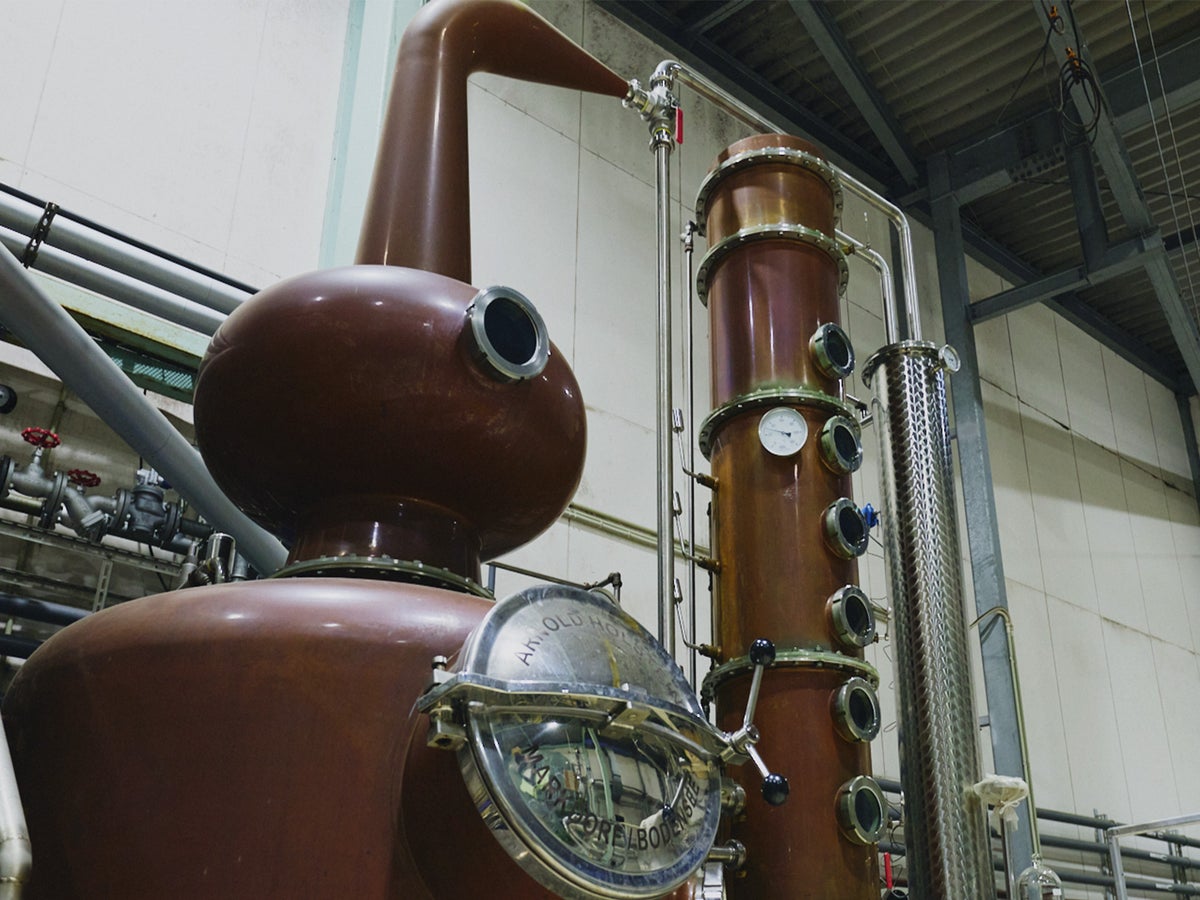
The distillation of the grain spirit involves some careful touches. The first distillation uses vacuum distillation, which lowers the air pressure so that the liquid boils at a lower temperature. This prevents the mash (the fermented liquid) from being damaged by heat and suppresses burnt aromas. The second distillation uses a hybrid still fitted with copper stills, where contact with the copper reduces unwanted DMS (dimethyl sulphide) notes. On this clean grain base, the richness and milky sweetness of Shindo Distillery’s malt are layered. The vanilla aroma of bourbon casks, the fresh fruitiness of wine casks and the oriental sweetness produced by Mizunara casks, made from Japanese oak, were blended with balance in mind so that no single element dominates.
If you want to taste it in Europe
The whisky is bottled at 46% ABV in a 700 ml bottle and costs 5,940 yen including tax in Japan. The official tasting notes list vanilla, bittersweet and refreshing natsumikan (a Japanese citrus fruit), the gentle sweetness of barley and a finish reminiscent of browned butter. The producer suggests two ways to drink it: neat, to appreciate its delicate aromatic structure, or with water or as a highball for casual enjoyment. No European release has been announced so far. A blend in which both malt and grain are made in-house from local barley is notable as one example of the efforts of Japanese craft whisky.
Sources
This article was written by The Sake Wire editorial team, summarising the public sources listed above. Images are our own.
Try Akita sake in the EU — from €6
180 ml tasting bottles and full-size sake, wine, beer and gin, shipped from Amsterdam within the EU.


