30 Years on from the Earthquake: Eight Nada and Nishinomiya Breweries Gather at a Shrine
Nishinomiya's sake festival, born from recovery after the Great Hanshin-Awaji Earthquake, reached its 30th edition, with eight local breweries including Hakushika and Ozeki gathering at Nishinomiya Sh
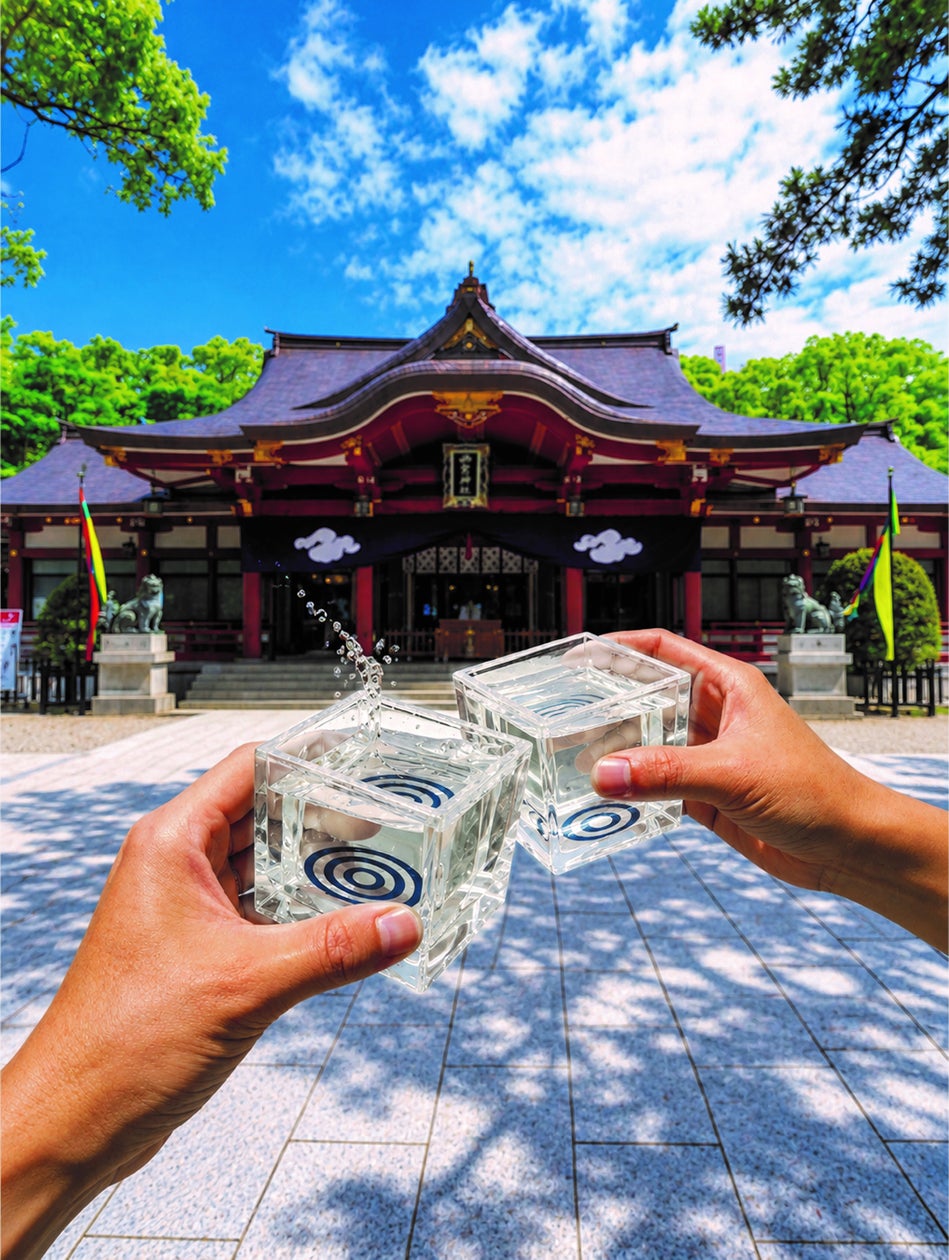
Nishinomiya, in Hyogo Prefecture, lies between Kobe and Osaka and forms part of Nadagogo, one of Japan’s leading sake-brewing regions. Nadagogo is the collective name for five brewing districts that stretch from eastern Kobe to Nishinomiya. On 3 and 4 October, eight breweries from the city came together at a single venue for the “30th Anniversary Nishinomiya Sakagura Renaissance and Food Fair”. The venue was Nishinomiya Shrine, known as a god of prosperous business. This annual event shows clearly how a region that also exports its sake wants to present itself.
Thirty Years of a Sake Town Back on Its Feet After the Earthquake
The Great Hanshin-Awaji Earthquake of 1995 caused heavy damage to Nishinomiya’s sake industry. The fair began out of a wish to show the whole country that the town had recovered. It is run by an organising committee made up of the Nishinomiya Shuzoka Tokakai, an association of local brewery owners, together with Nishinomiya City, the Nishinomiya Tourist Association and the Nishinomiya Chamber of Commerce and Industry. This year, for the 30th edition, the event also carried a message of thanks for the support received so far, as well as encouragement for regions now working to recover from disasters.
From Major Names to Small Local Breweries: Eight Breweries in One Precinct
In the pine grove within the shrine grounds, eight companies set up booths: Hakushika, Hakutaka, Nihonsakari, Ozeki, Takara Musume, Tokuwaka, Shimabijin and Nadaichi. They offered paid tastings and sales. A distinctive feature of the event is that large breweries whose sake is distributed overseas stand alongside small breweries whose sake is mainly drunk locally, all on equal terms. Along the approach to the shrine, around 30 restaurants and food trucks from the city served dishes that go well with sake, such as oden and karaage. As a special feature for the anniversary, five places in the city, including museums and direct-sales shops run by breweries, served as satellite venues, linked to the shrine by a shuttle bus. One of the five is the Hakushika Kinen Sake Museum (Sake Museum). Presenting the whole town, rather than a single brand, as a “sake-producing region” is an approach that also applies to building regional brands in overseas markets.
Brewing Songs and the Memory of the “Shinshu Bansen”
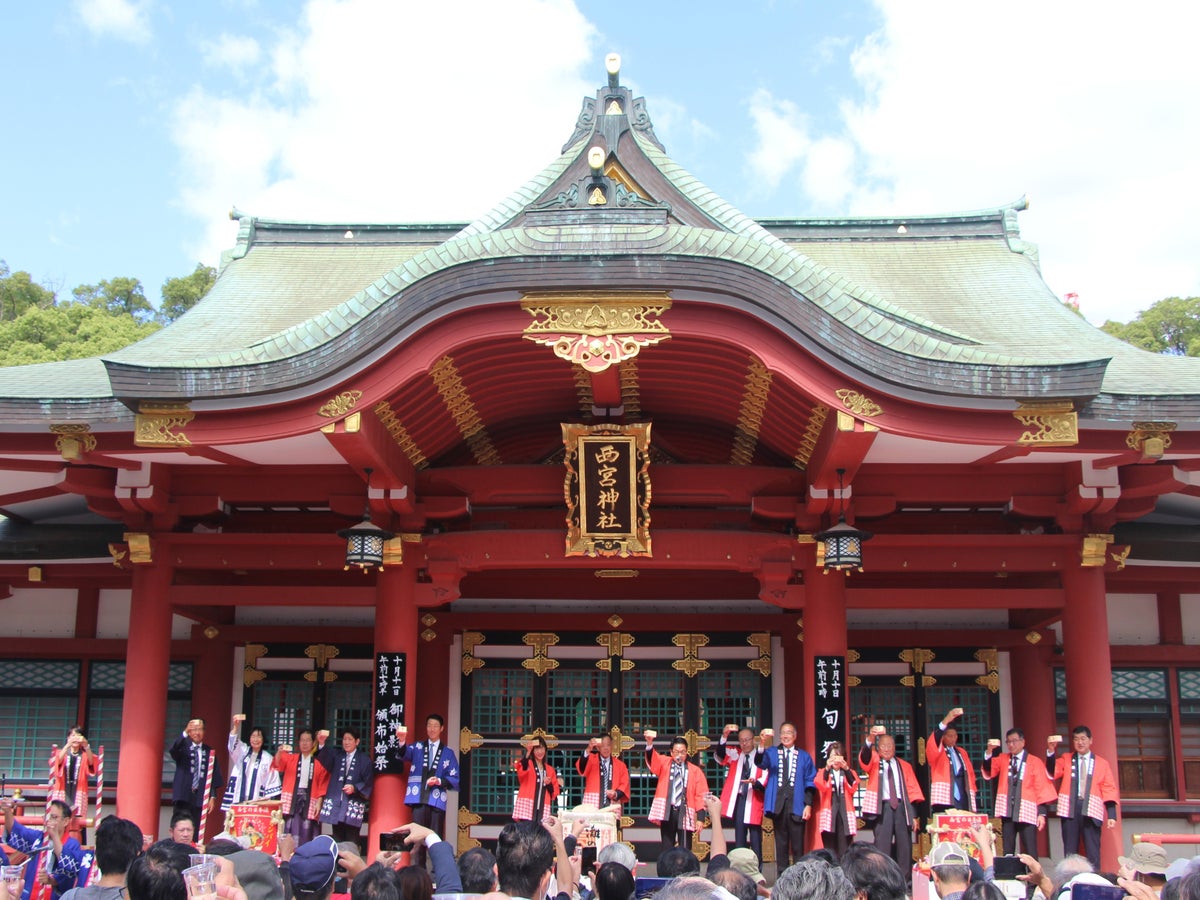
At the opening ceremony, the preservation societies of Hakushika and Ozeki performed “sake-zukuri uta” (sake-brewing songs), which kurabito (the craftsmen who make sake) have handed down by singing as they work, and a kagami-biraki was held. Kagami-biraki is a ceremony in which the lid of a sake barrel is broken open with a wooden mallet in celebration. For the toast, 800 transparent acrylic masu, modelled on the traditional square sake vessel, were prepared in a limited edition to mark the 30th anniversary. Another highlight was a re-enactment of the Edo-period “Shinshu Bansen”. In those days, boats raced to be the first to carry Nada’s new sake to Edo (present-day Tokyo), and the boat that arrived first was celebrated as “Soichiban”. This time, volunteers from the breweries paraded around the shrine grounds to a band’s music, calling out “Soichi!”.
If you want to taste this region in Europe, start by looking for “Nada”, “Nishinomiya” or “Hyogo” on the label or in the importer’s description. Standard sakes from large breweries such as Hakushika, Ozeki and Nihonsakari are relatively easy to find, so if you can get hold of one, we recommend comparing it with sake from a small brewery. Even sake made with the water and climate of the same district may reveal differences in character from one brewery to the next. Following the example of the fair’s stalls, enjoying it lightly warmed alongside hot oden or karaage is also one of the ways of savouring Nada sake.
Sources
- PR TIMES (Nishinomiya Chamber of Commerce and Industry), “[30th Anniversary] Packed with special events to say thank you! Eight Nishinomiya breweries gather for the ‘Nishinomiya Sakagura Renaissance and Food Fair’” https://prtimes.jp/main/html/rd/p/000000012.000176313.html
Sources
This article was written by The Sake Wire editorial team, summarising the public sources listed above. Images are our own.
Try Akita sake in the EU — from €6
180 ml tasting bottles and full-size sake, wine, beer and gin, shipped from Amsterdam within the EU.


