Takara Shuzo releases limited-edition pure gold leaf junmai 'Omiki' small bottle
Kyoto's Takara Shuzo has again released, in limited numbers, a 180ml bottle of gold-leaf junmai: the ritual sake offered to the gods and then shared by all at New Year.
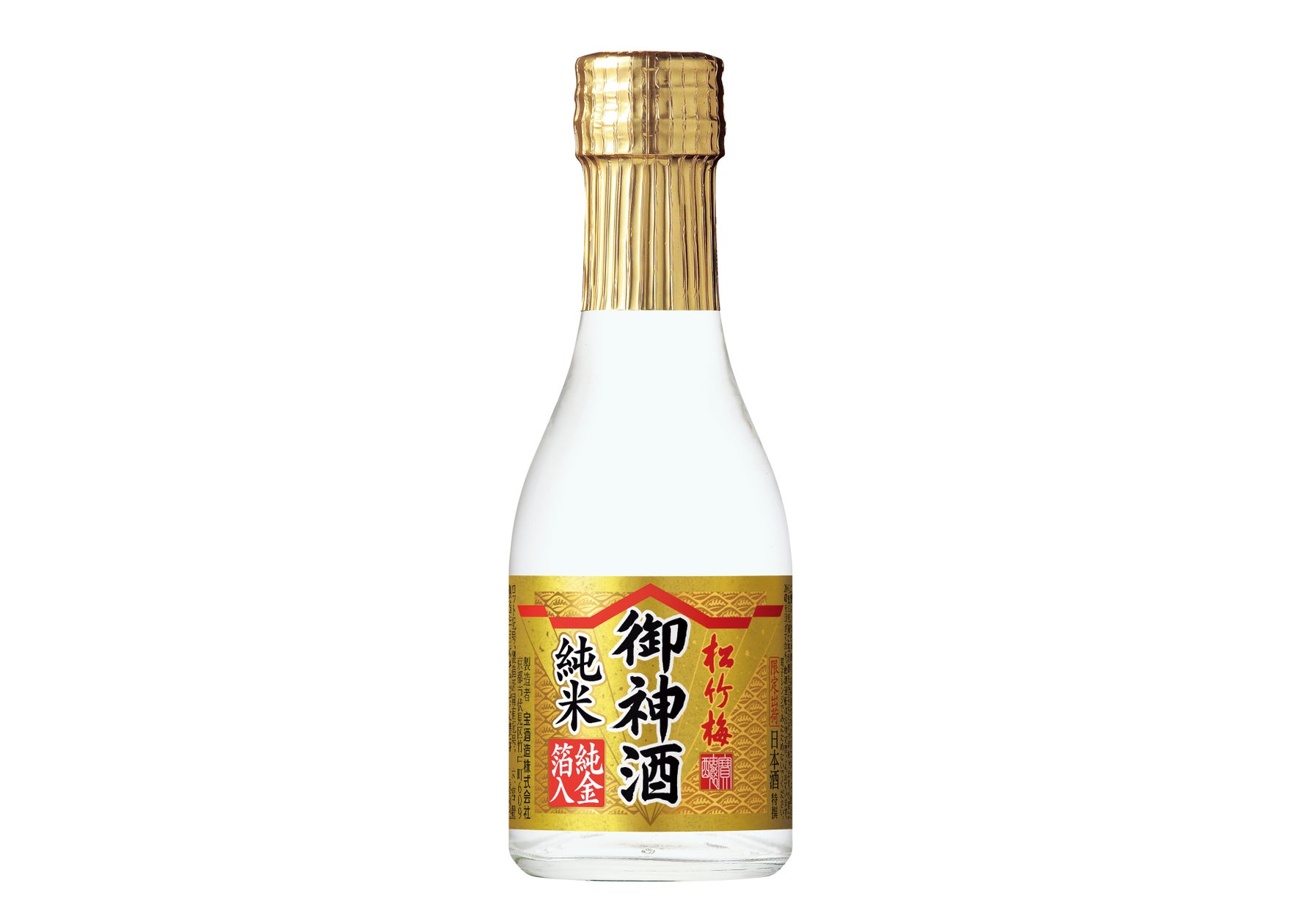
Takara Shuzo, a major sake producer headquartered in Kyoto, released a 180ml bottle of “Tokusen Shochikubai ‘Omiki’ Junmai with Pure Gold Leaf” (特撰松竹梅「御神酒」<純米>純金箔入), from its flagship Shochikubai brand, in limited numbers across Japan on 20 October 2026. It is a seasonal product the company puts out at this time every year, aimed at the end-of-year and New Year period, when demand for sake is at its highest. The suggested retail price is 344 yen before tax.
Sake offered to the gods, then shared
“Omiki” is sake offered to the gods on special days such as Shinto festivals and ceremonies. After the offering, it is taken down as “osagari” and drunk by the people present, following a custom rooted in the idea that sharing the same drink as the gods lets people share in their blessings. Many Japanese homes and companies keep a small altar called a “kamidana”, and the sight of sake being offered there becomes more common as the new year approaches. The small 180ml size is meant to be easy to place on a kamidana and easy to finish in one go as osagari.
Junmai sake polished to 70%, crisp and dry
Inside is a “junmai” sake. Junmai refers to sake brewed only from rice and rice koji, with no added brewer’s alcohol. A “seimai buai” (rice polishing ratio) of 70% means that 30% of the outside of the brown rice was milled away and the remaining 70% was used for brewing. The alcohol content is 15%, and the rice used is domestic. The Sake Meter Value, a guide to dryness, is +4 (the higher the plus figure, the drier the sake), and the acidity is 1.4; Takara Shuzo describes it as “a satisfying dry sake”. Real gold leaf floats in the bottle, and the label has a showy design based on gold. Takara Shuzo also sells the year-round “Josen Shochikubai ‘Omiki’ with Pure Gold Leaf” (上撰松竹梅「御神酒」<純金箔入>); this junmai version is a slightly higher-grade addition available only at year-end, in limited quantities.
Enjoying it in Europe
Takara Shuzo is one of the major sake makers that set up a local subsidiary in the United States around 1980, and it has promoted sake overseas from an early stage. However, it has not been announced whether this limited product will be exported to Europe. Even so, there is something to take from the story. Pouring sake a little at a time into small cups on New Year’s Eve or New Year’s Day, and first “offering” a cup before the toast, is a Japanese custom that is easy to bring into European New Year celebrations. A dry junmai may show more of its rice umami when served at room temperature or lightly warmed. At Japanese grocery shops, look first for the “Shochikubai” label or the word “junmai”, and keep an eye out for gold-leaf celebration sake appearing on the shelves towards the end of the year.
Sources
- PR TIMES / 宝ホールディングス「【宝酒造】特撰松竹梅「御神酒(おみき)」<純米>純金箔入180ml 数量限定発売」
- SAKE Street「世界で増え続けるSAKE醸造所と、そこにある課題 - SAKEの世界化時代に向けた提言(1)」
This article was written by The Sake Wire editorial team, summarising the public sources listed above. Images are our own.
Try Akita sake in the EU — from €6
180 ml tasting bottles and full-size sake, wine, beer and gin, shipped from Amsterdam within the EU.


