Gold leaf swirls in Takara Shuzo's sparkling sake Mio GOLD, launching as a year-end limited edition
Takara Shuzo will release a premium edition of its sparkling sake Mio with pure gold leaf on 10 November, in limited quantities across Japan.
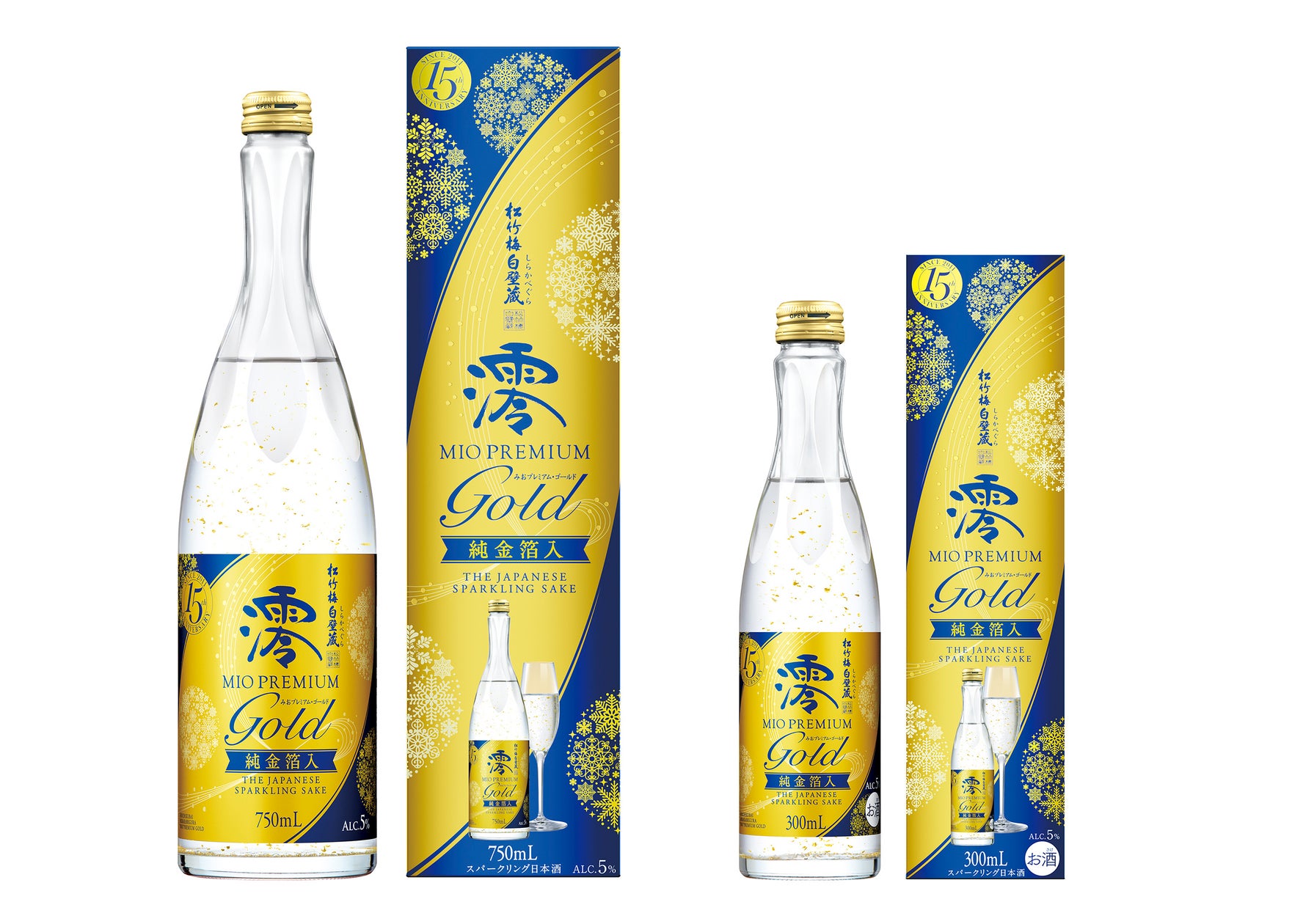
Takara Shuzo, a major sake brewer headquartered in Kyoto, will release a special edition of its sparkling sake Shochikubai Shirakabegura “Mio” (MIO), the “PREMIUM
Gold leaf swirling in the glass, with a richer flavour

Mio GOLD is made with the brewery’s own yeast and fermented slowly over a long period. According to Takara Shuzo, it is characterised by a showy aroma and a richer flavour than the standard Mio. The bottle contains pure gold leaf, which swirls up and sparkles when the sake is poured into a glass. The packaging is also based on a gold design and comes in a carton suited to gift-giving.
Mio GOLD in numbers

At 5% alcohol by volume, it is roughly one third the strength of typical sake (around 15–16%), as light as beer. The sake meter value (Nihonshu-do) is −70. This value is a guide to sweetness and dryness: the more negative it is, the sweeter the sake, so this is a very sweet style. Acidity is on the high side at 4.0, which tightens the sweetness. The ingredients are domestically grown rice and koji made from domestically grown rice, with carbon dioxide and gold leaf added. It comes in two sizes, 750ml and 300ml, with recommended retail prices in Japan (excluding tax) of 2,227 yen for 750ml and 869 yen for 300ml. The best-before period is 10 months.
A growing trend towards low-alcohol sake

Against a backdrop of growing health consciousness, the global drinks industry is developing more low-alcohol beverages. Sake is no exception: major producers keep releasing lower-strength sake, such as Gekkeikan’s 5% product and Takara Shuzo’s 9% product. Mio is one of the leading examples of this lighter style of sake.
This limited edition is being released for the Japanese domestic market, and no plans for sales in Europe have been announced. The standard Mio, however, can sometimes be found in specialist sake shops and Japanese grocery stores, and that is the easiest place to start. To enjoy it, you can chill it well and pour it into a flute glass to appreciate the bubbles and aroma. The balance of sweetness and acidity is closer to a dessert wine than to a dry sparkling wine, so it should pair easily with fruit-based desserts and mild cheeses. For a year-end party, it could also be an alternative to Champagne for the toast.
Sources
- PR TIMES / 宝ホールディングス「【宝酒造】松竹梅白壁蔵「澪」PREMIUM〈GOLD〉純金箔入【数量限定】発売」
- SAKE Street「日本酒の度数はどこまで下がる? - 増える低アル日本酒のいま(前編)」
This article was written by The Sake Wire editorial team, summarising the public sources listed above. Images are our own.
Try Akita sake in the EU — from €6
180 ml tasting bottles and full-size sake, wine, beer and gin, shipped from Amsterdam within the EU.


