Shochu fermentation CO2 turned into dry ice
A shochu distillery in Kagoshima has successfully captured CO2 from fermentation and turned it into dry ice, a first step towards using sake-making by-products as a resource.
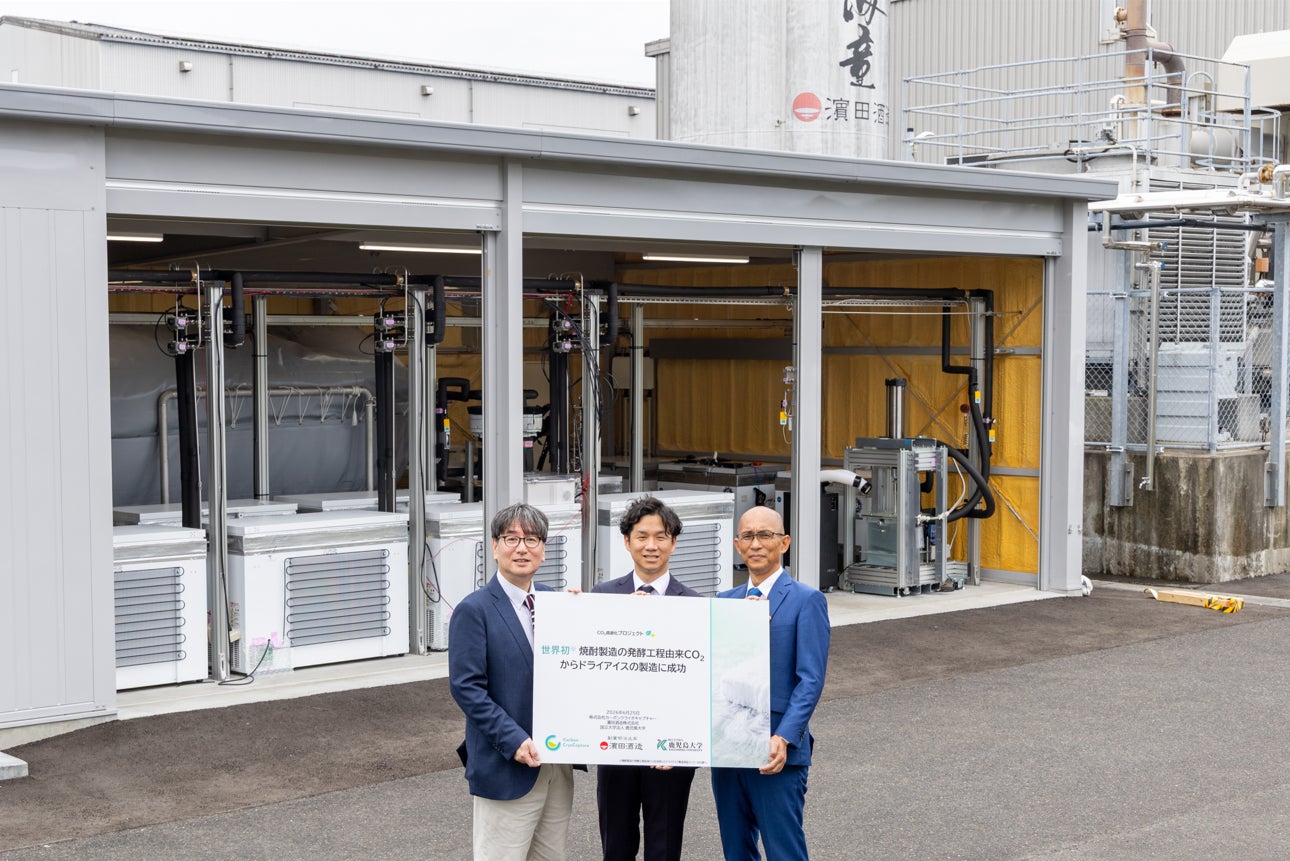
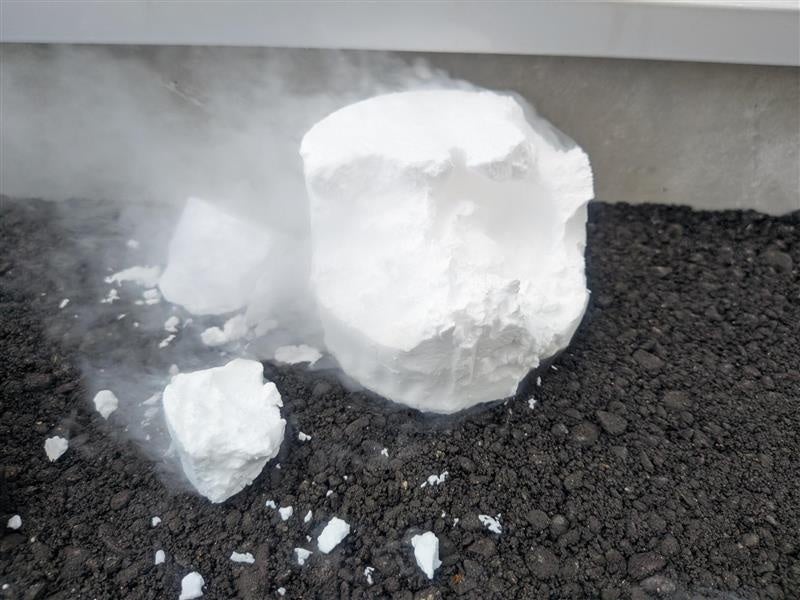
A Japanese shochu distillery has succeeded in capturing the carbon dioxide (CO2) released during fermentation and turning it into dry ice as a commercial product. On 25 June 2026, Carbon CryoCapture Inc., a start-up based in Tsukuba, Ibaraki Prefecture, announced the results of joint research with the shochu producer Hamada Syuzou Co., Ltd. and Kagoshima University. The plant was installed at Hamada Syuzou’s Denzoin-gura distillery in Ichikikushikino, Kagoshima Prefecture, in southern Kyushu, where dry ice was made from the CO2 produced in the shochu fermentation process. According to the company, this is the world’s first demonstration of dry ice production from shochu fermentation CO2.
Looking at the by-product of fermentation
Shochu is a Japanese spirit made by fermenting ingredients such as sweet potato, barley or rice and then distilling the result. When yeast produces alcohol, it also releases CO2. This CO2 is plant-derived and highly concentrated, yet until now it has hardly been put to use. Meanwhile, the supply of dry ice in Japan has become unstable, because the facilities supplying the CO2 used as its raw material are ageing and production capacity is shrinking. According to Izumi Ichinose, Representative Director of Carbon CryoCapture, Japan produces around 300,000 tonnes of dry ice a year, used for delivering frozen food and storing pharmaceuticals, but a shortage of liquefied CO2 as raw material is leading to growing imports.
From capture to finished product with a proprietary absorbent
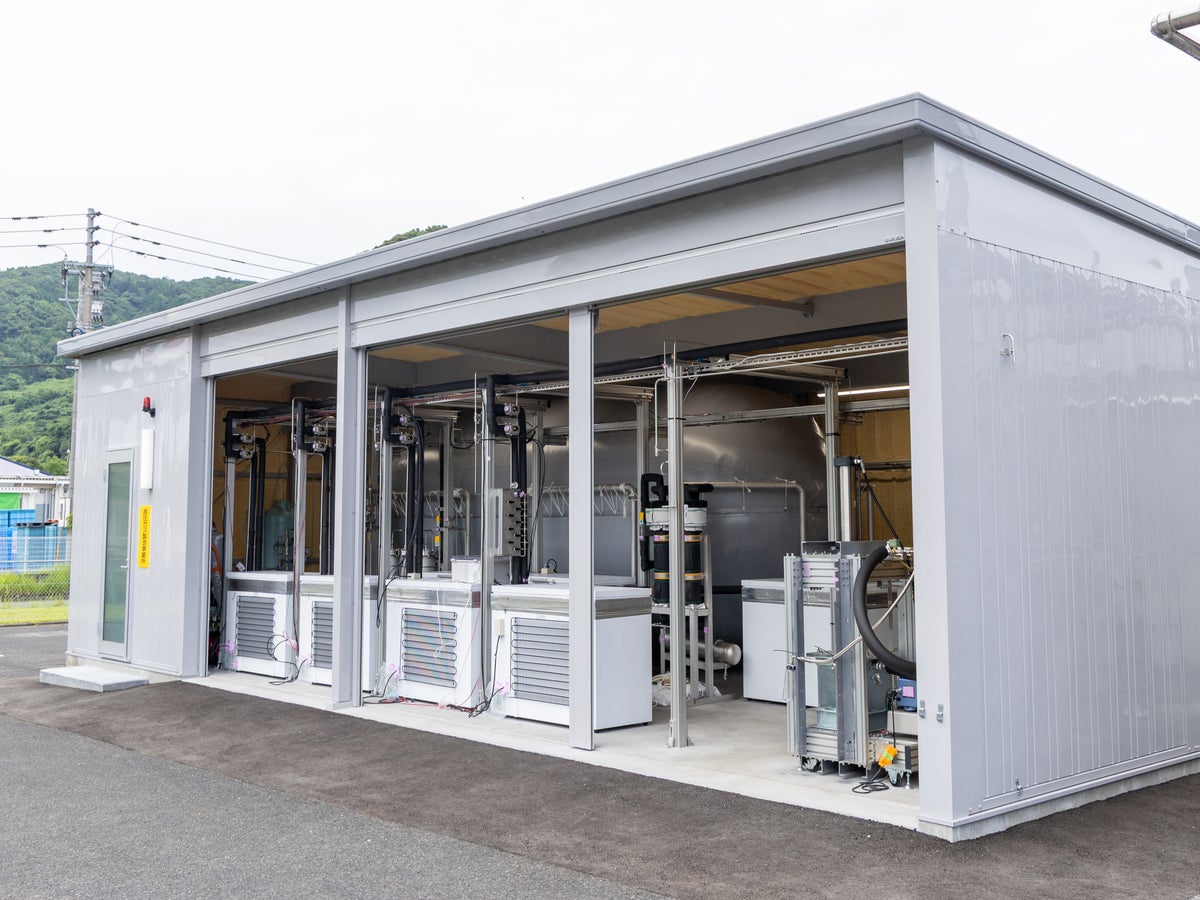
The capture relies on a PDMS-based (a type of silicone) absorbent developed by the company’s founding members at the National Institute for Materials Science (NIMS). Compared with conventional porous adsorbents, CO2 diffuses through the material several hundred times faster, which the company says allows it to take in highly concentrated CO2 efficiently. The three parties have divided their roles as follows: Carbon CryoCapture designs and operates the plant, Hamada Syuzou provides the site for the demonstration and the CO2 supply, and Kagoshima University offers technical advice on the fermentation process and handles regional cooperation.
Keeping the cycle within the region
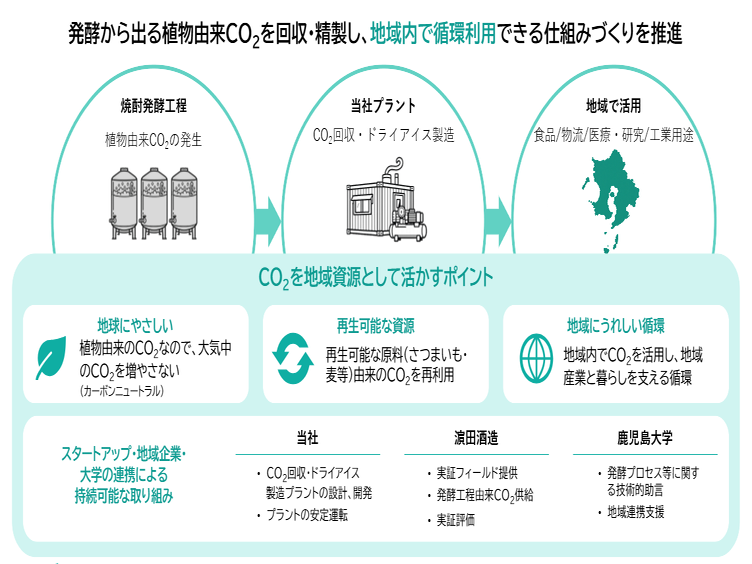
The aim is a circular model in which CO2 produced in a region is used in that same region. At the time of the announcement, the companies said they were carrying out quality evaluation and profitability checks, with the goal of starting local sales around the summer of 2026. That target period has already passed, but this release alone does not confirm whether sales have actually begun. In the future, they aim to produce on a scale of 200 tonnes a year and are also considering applications in other industries that emit highly concentrated CO2. Kotaro Hamada, President of Hamada Syuzou, commented that it is highly significant that the clean CO2 generated by plant-based fermentation has come to be seen as a regional resource.
The dry ice itself will not be reaching Europe. Even so, it is an interesting development for anyone wanting to know more about the makers: Japanese distilleries are starting to rethink even the by-products of fermentation as resources. If you come across Kagoshima imo shochu (sweet potato shochu) in Europe, pay attention to its sweet, toasty aroma of sweet potato. Asking an importer or a liquor shop about the distillery’s environmental initiatives may also give you a glimpse of the people behind the bottle.
Sources
This article was written by The Sake Wire editorial team, summarising the public sources listed above. Images are our own.
Try Akita sake in the EU — from €6
180 ml tasting bottles and full-size sake, wine, beer and gin, shipped from Amsterdam within the EU.


