Ehime's historic brewery Koinose finds a ready market in Singapore
Ehime's 140-year-old Koizumi Shuzo is selling Koinose, a sake built on the legend of a carp turning dragon, in Singapore stores to widen its overseas reach.
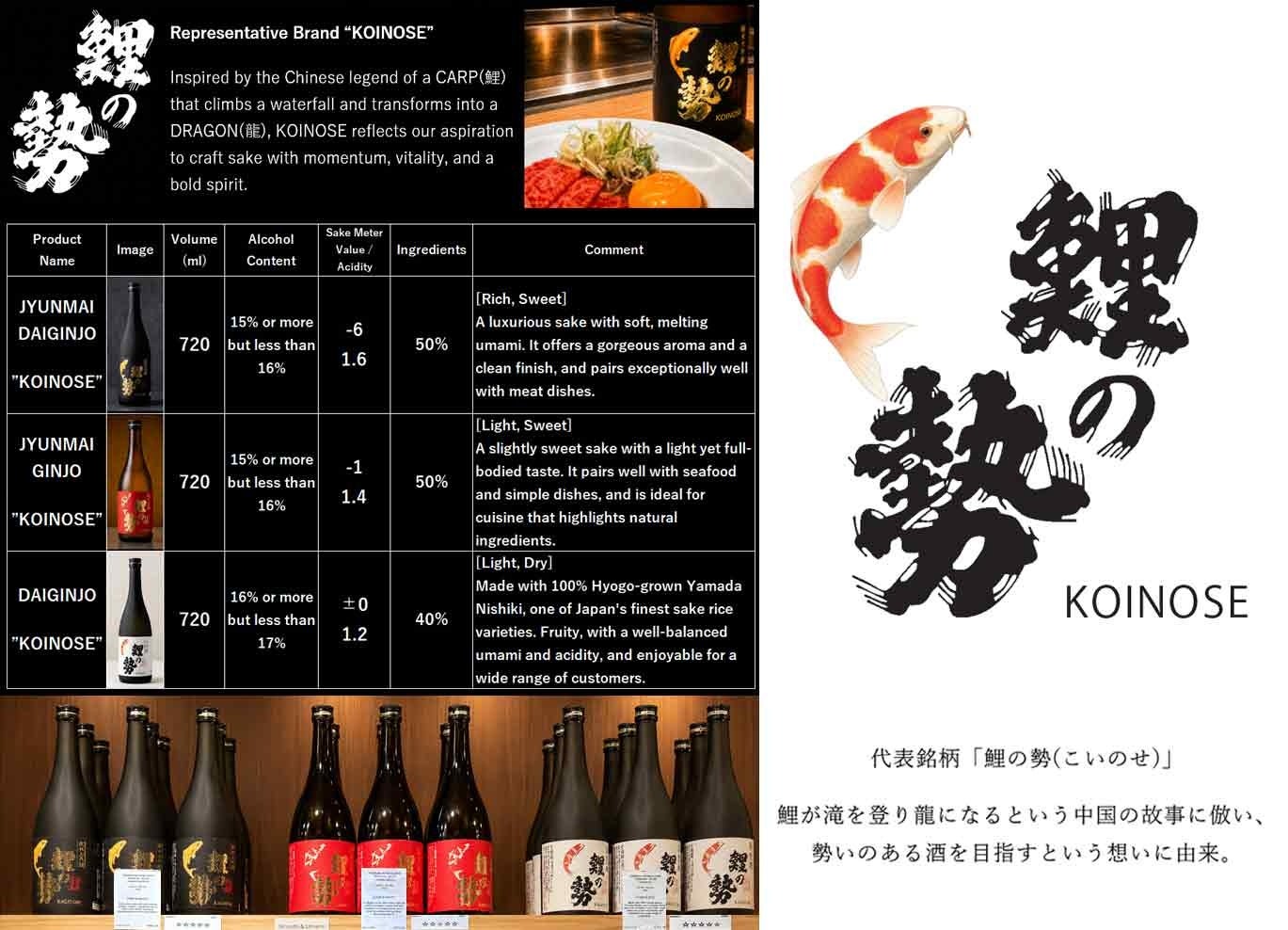
Koizumi Shuzo has been brewing sake since 1886 in Yawatahama, Ehime Prefecture, in the west of Japan’s Shikoku island. This small regional brewery has now taken its Koinose brand overseas. It is selling well at the Community Market in-store section of MUJI at Plaza Singapura in Singapore, and the company has announced that it will use this as a foothold to begin expanding its overseas sales in earnest.
A carp-turns-dragon legend on the label

The brand name comes from a Chinese legend in which a carp that manages to climb a waterfall becomes a dragon. This story of energy, vitality and the spirit of challenge is easily accepted in Singapore, which has a large ethnic Chinese population, and many customers reportedly take an interest in the meaning of the name and the label design. The weighty label, in black and gold, stands out on the shelf and is said to be valued as a sake for gifts and special meals.
Three sakes with different flavours, and what to eat with them

The new sakes for spring 2026 are a Junmai Daiginjo, a Junmai Ginjo and a Daiginjo, which went on general sale on 15 April. “Ginjo” and “Daiginjo” are premium grades in which the rice is polished more heavily to bring out aroma, while “Junmai” means the sake is made only from rice, rice koji and water, with no added brewer’s alcohol. The Junmai Daiginjo is rich and slightly sweet, and pairs easily with meat dishes. The Junmai Ginjo is light yet full-bodied and slightly sweet, suited to seafood and delicate dishes. The Daiginjo leans dry with a crisp, light taste; it uses only Yamada Nishiki, a sake rice grown in Hyogo Prefecture, and is characterised by its fruity aroma and a balance of umami and acidity. The first production run was small, at 240 bottles of each, or 720 in total. Sales are mainly direct, and the sakes are also stocked at a high-end sushi restaurant in Ginza and a yakiniku restaurant in Roppongi, both in Tokyo.
How a small brewery sells abroad
According to Koizumi Shuzo, local customers value not only the beauty of the look but also the drinkability, the showy aroma and the pleasant aftertaste, and the sakes are chosen not just by people used to drinking sake but also by those trying genuine sake for the first time. At the time of the announcement, the company said it would keep developing new products and, through brewery tours and workshops where visitors can learn how sake is made, would share sake culture and techniques in Japan and abroad.
The announcement did not mention distribution in Europe. Even so, the case shows how a regional brewery without large production volumes can reach overseas shelves with an easy-to-grasp story and a range designed so that you can choose by food pairing. When choosing a bottle at a sake specialist, look at the grade and the sweet or dry indication on the label. Using these three bottles as an example, you could pair the sweeter Junmai Daiginjo with roast meat, the Junmai Ginjo with seafood, and the dry Daiginjo with a light starter.
Sources
This article was written by The Sake Wire editorial team, summarising the public sources listed above. Images are our own.
Try Akita sake in the EU — from €6
180 ml tasting bottles and full-size sake, wine, beer and gin, shipped from Amsterdam within the EU.


