Yamauchi Toji guild competition: Itteki Senryo Daiginjo wins a top-class award
At a competition where Akita's toji judge as fellow brewers, Itteki Senryo Daiginjo, made by Akita Hakko Kogyo in Yuzawa, won a top-class award.

A competition where toji judge toji’s sake
A toji is the master brewer who leads production at a sake brewery. In Japan, each region has its own toji guild, and each has handed down its own techniques and traditions. The Yamauchi Toji Guild in Akita Prefecture, on the Sea of Japan side of northern Honshu, is one of them, and is now in its 104th year since its founding. To improve the skills of toji and kurabito (the craftspeople who work in a brewery) in the prefecture, the guild holds a jikon-shu kanpyokai, a competition for sake brewed by its members’ own breweries. In fiscal 2026 (Reiwa 8), 63 sakes from 22 breweries were entered, and 10 judges assessed quality and flavour by tasting. Eight breweries won awards, among them Akita Hakko Kogyo (Yuzawa, Akita Prefecture), part of the Oenon Group, whose Itteki Senryo Daiginjo received the Yamauchi Toji Guild top-class award.
The Yamauchi lineage has also produced distinctive brewers. Toichi Takahashi, known for Yuri Masamune and Yuki no BoshA, advocated the “three-nothings brewing” method: no stirring of the moromi (fermenting mash), no filtering and no added water. What gives this competition its weight, unlike an ordinary tasting contest, is that brewers who share the same craft judge one another’s sake.
A brewery that claims “a single drop worth a thousand ryo”
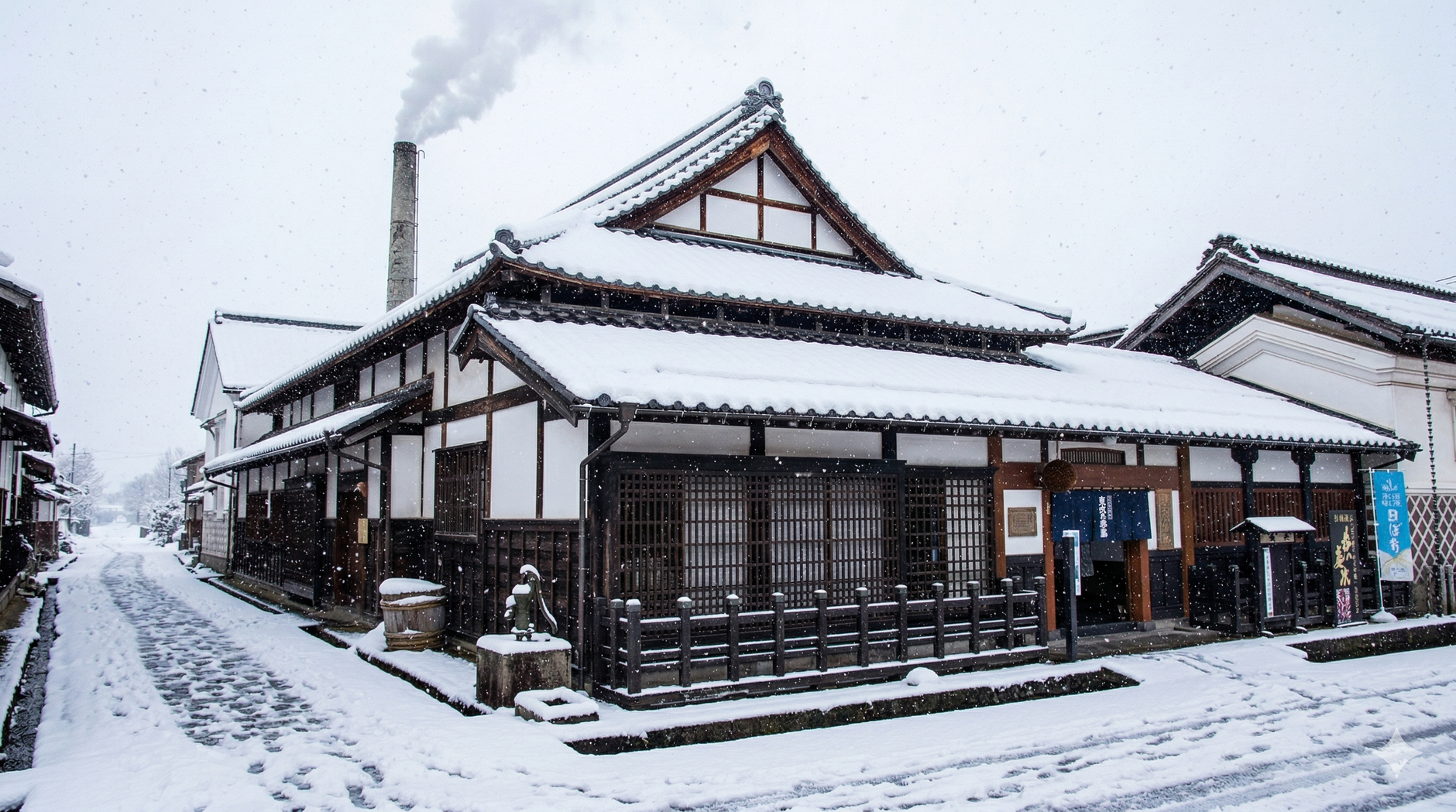
Akita Hakko Kogyo is a brewery of the Oenon Group, which makes everything from shochu to Western-style spirits, and is said to be the newest brewery in Yuzawa. Its flagship brand, Itteki Senryo, was launched in 1974, and the name carries the idea that even a single drop is worth a thousand ryo. The brewery continues to make sake that draws on the climate and natural bounty of a cold, snowy region. Daiginjo is the highest-ranking grade, made with rice polished from the outside until it is reduced to 50% or less of its original weight, and is known for its aromatic fragrance and clear flavour.
Pairing it with a winter hotpot
The brewery itself suggests pairing the sake with kiritanpo nabe, an Akita regional hotpot (mashed rice wrapped around a stick and grilled, then simmered in chicken stock). If you are looking for this sake in Europe, watch for the brand name “Ittekisenryo” and the word “Daiginjo” on the label. Daiginjo is said to open up more readily in a wine glass, served slightly chilled. It should also suit dishes with gentle savoury depth, such as something simmered in chicken bouillon or a winter mushroom soup. As a sake endorsed by fellow brewers, it might be fun to taste it alongside daiginjo from other breweries.
Sources
- オエノンホールディングス「山内杜氏(さんないとうじ)組合自醸酒鑑評会で「一滴千両 大吟醸」が山内杜氏組合優等賞を受賞しました」
- SAKE Street「日本酒の「櫂入れ」とは?(2) - しないとどうなる?さまざまな方法と効果を学ぶ」
This article was written by The Sake Wire editorial team, summarising the public sources listed above. Images are our own.
Try Akita sake in the EU — from €6
180 ml tasting bottles and full-size sake, wine, beer and gin, shipped from Amsterdam within the EU.


