183 Women Judges Choose 116 Gold Medal Sakes at the Bishu Competition
A panel of 183 women judges from six countries blind-tasted 312 sakes from Japan and the US, and the 116 gold medal winners of the 4th Bishu Competition 2026 have been decided.
Sake competitions are plentiful, but one that restricts its judges to women, and that divides entries into categories by aroma and flavour rather than by production grade, is rare. The Japan Women’s SAKE Award (Bishu Competition), organised by the Women’s Association for Loving SAKE and WINE (known as SAKE Onna no Kai), held its fourth judging session in Sendai, Miyagi Prefecture, on 6 September 2026 and announced 116 gold medal sakes on 18 September.
183 judges from six countries, blind-tasting in six categories
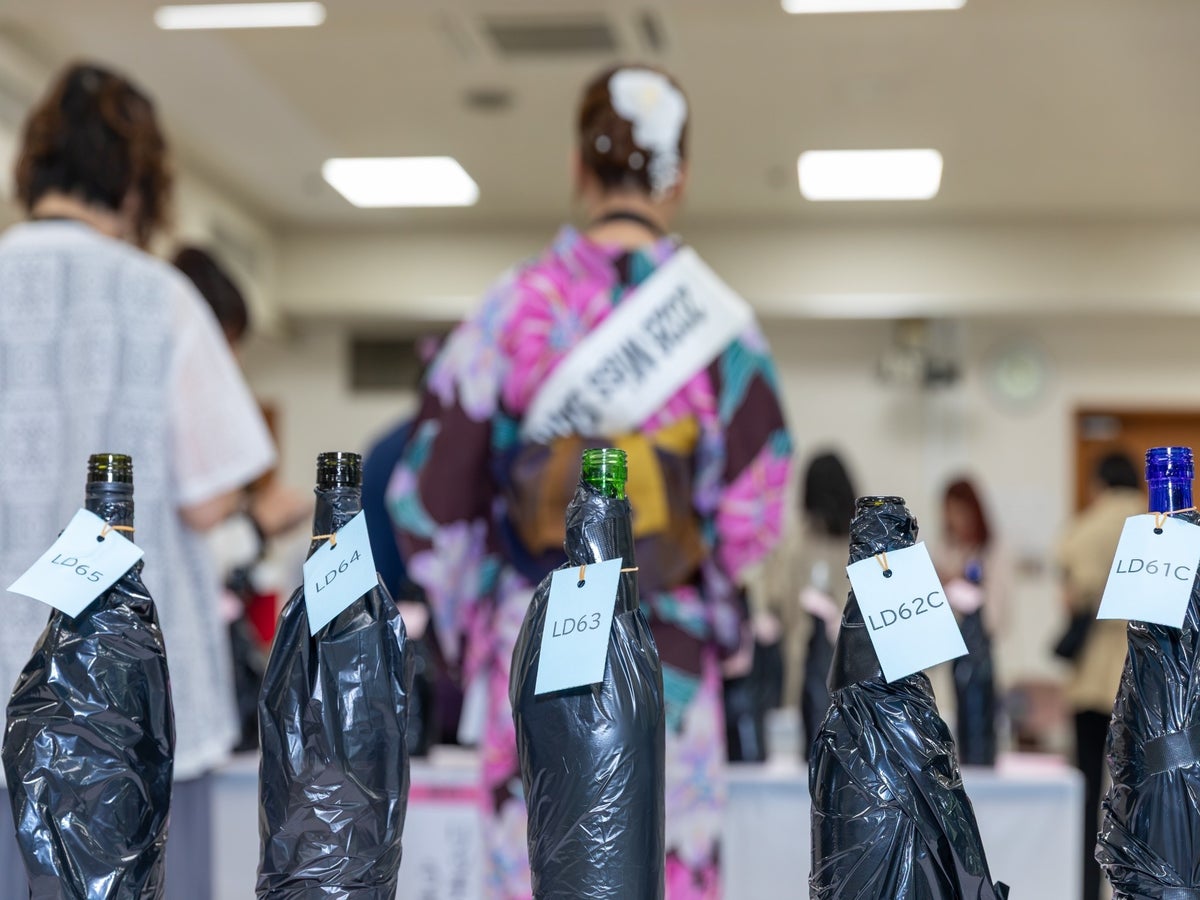
This year, 312 entries were submitted by 112 companies in Japan and the United States. The 183 judges were women from Japan, South Korea, Taiwan, Singapore, the United States and Australia, and they fall into two tiers: “official judges”, who hold alcohol-related qualifications, and “amateur judges”, who take part on the sole condition that they love sake. All tasting is blind, with brands completely concealed. Each sake is scored out of 20 points for the quality of the sake itself and out of 50 points for how well it shows the characteristics of its category. The design allows the perspective of experts and the instincts of ordinary drinkers to be reflected together in the assessment of the same sake.
Grouped by “taste type”, not by label grade
There are six categories: Fruity, Light & Dry, Rich & Umami, Aged, Sparkling and Low Alcohol. Sake is normally classified as “junmai daiginjo”, “junmai” and so on, according to the rice polishing ratio (how much of the outside of the rice has been milled away) and whether brewer’s alcohol has been added, but these labels make it hard to tell what a sake will taste like. The Bishu Competition attaches a category-specific medal seal to its winners, so that the flavour profile can be understood simply by looking at the bottle. The gold medals break down as follows: Fruity 32, Light & Dry 27, Rich & Umami 28, Aged 9, Sparkling 14 and Low Alcohol 6. Shimizu Seizaburo Shoten’s “Zaku” from Mie Prefecture appeared in several categories; from the host prefecture of Miyagi, winners included Ichinokura, Niizawa Brewery and Saura (Urakasumi); and a brewery from Hawaii in the United States also took a gold medal in the Fruity category.
Top honours announced in Sendai on 24 October
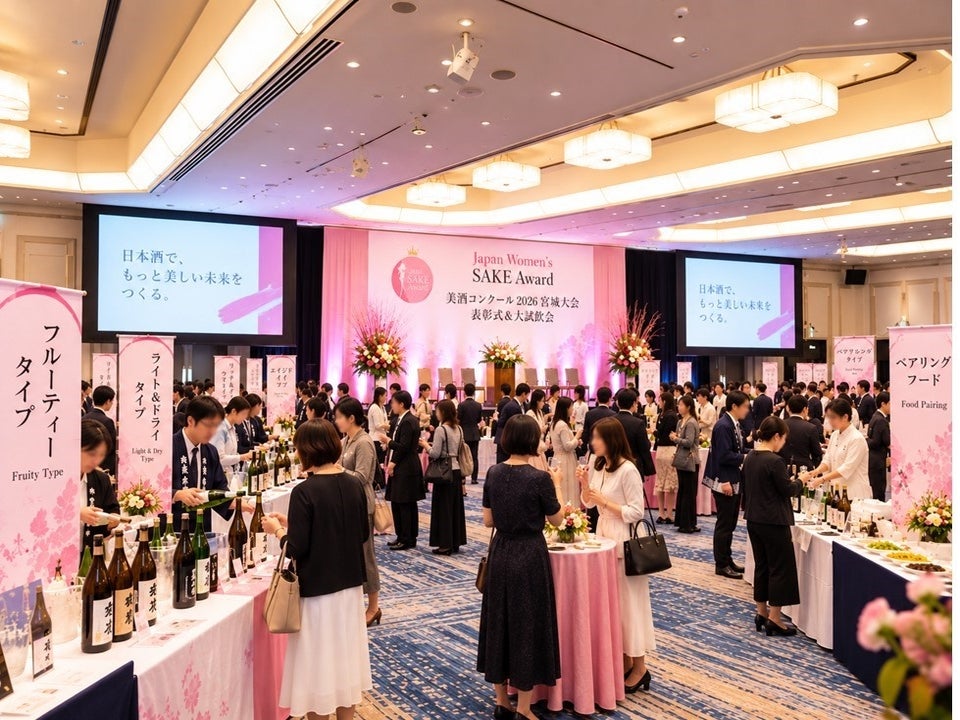
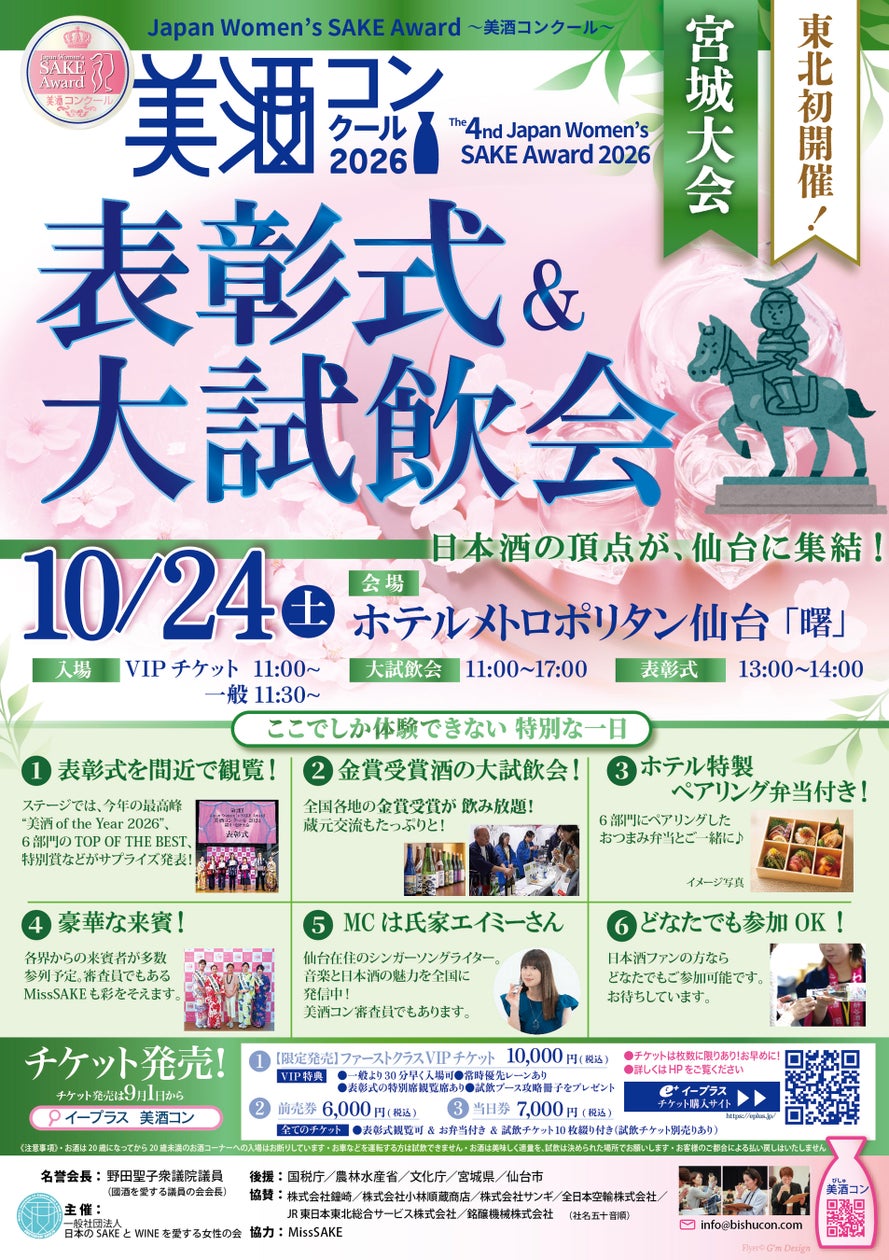
From among the gold medal winners, the six top prizes for each category (“TOP OF THE BEST”), the Miyagi Governor’s Prize, special awards such as the Cabin Crew Award and the Sommelier Award, and the competition’s ultimate honour, “Bishu of the Year 2026”, were announced at the awards ceremony held at Hotel Metropolitan Sendai on 24 October.
For European readers, what makes these results useful is that the category names themselves become a way of finding a sake to your taste. If you want an expressive, white-wine-like aroma, look to the winners in the Fruity category; for a clean sake that pairs easily with food, Light & Dry; and if you would like to explore the world of aged sake, Aged. Use them as a starting point and compare them with what local importers and online shops stock. The strength of this competition is that you can choose by flavour direction even if you are not familiar with grade labels, and tracking down the top-prize winners announced in October in Europe is part of the fun.
Sources
This article was written by The Sake Wire editorial team, summarising the public sources listed above. Images are our own.
Try Akita sake in the EU — from €6
180 ml tasting bottles and full-size sake, wine, beer and gin, shipped from Amsterdam within the EU.


