Distilled on Oki's island: craft gin GodSpirits moves to in-house production
Shimane's Oki craft gin, holder of four medals from international competitions, has switched to production at a new distillery on the island and arrives with a new label showing the year of production
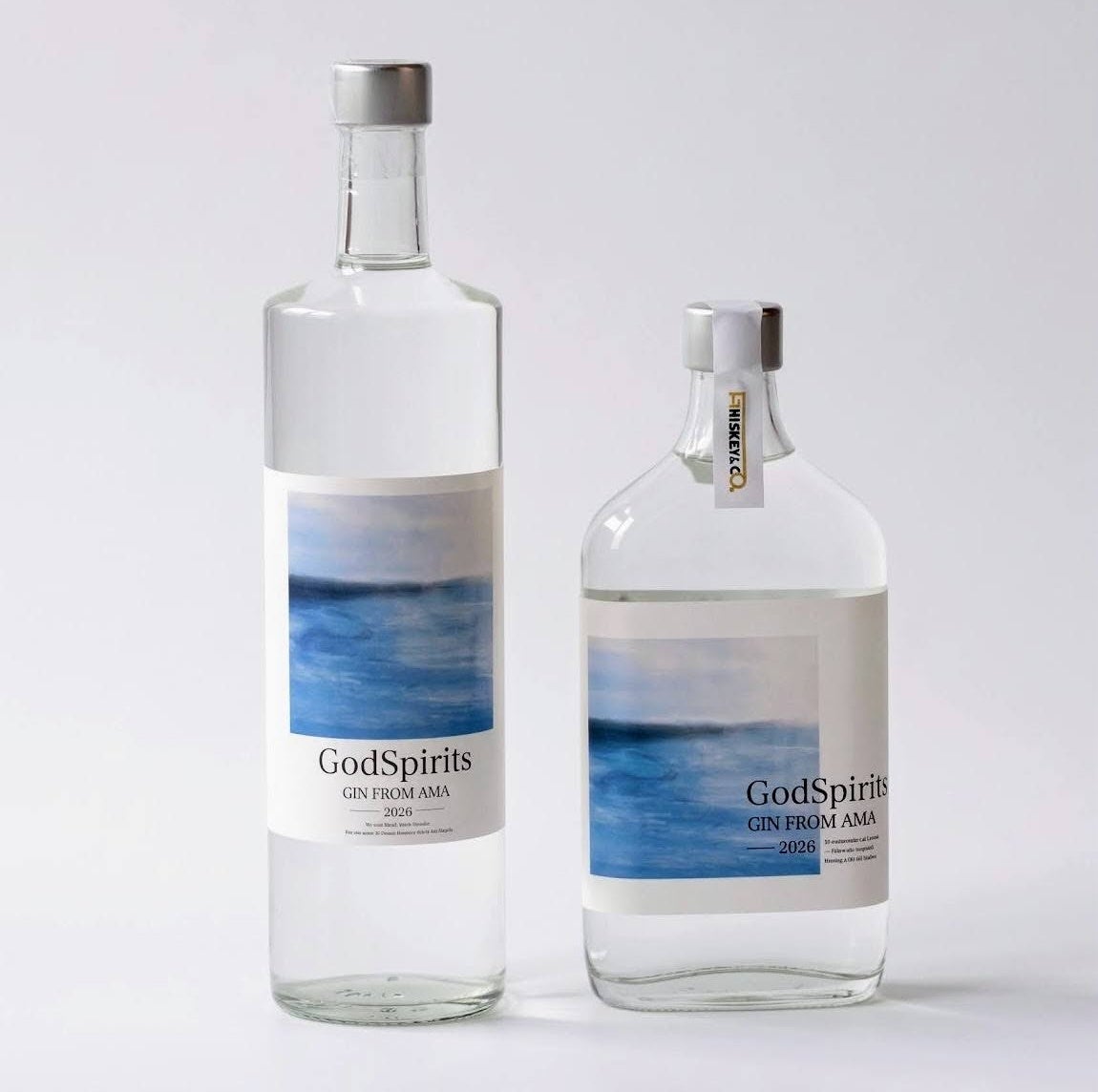
GodSpirits, a craft gin made in Ama (Ama-cho) on the Oki Islands (Shimane Prefecture) in the Sea of Japan, went on sale with a new label on 16 September 2026. Its maker, AMA Whiskey&Co., had until now produced the gin at a partner distillery on the mainland. It has now switched to its own distillery, Distillery Drift Mark, which opened on the island in June 2026. In addition to the existing 700ml bottle, a 375ml size has been added, so the gin now comes in two sizes.
“A gin that captures Oki”, finally distilled on the island
GodSpirits was developed around the concept of “a gin that captures Oki”. The key botanical is kuromoji (spicebush), known on Oki as “fukugi”. Kuromoji is a shrub of the laurel family that grows wild in Japan’s mountains; its twigs and leaves have a fresh, forest-like scent, and in Japan it has long been used for tea and toothpicks. To this are added saki mikan, a citrus fruit grown in Ama, arame, a seaweed that is a speciality of Oki, and nigari (bittern) left over from making the island’s salt. Alongside classic ingredients such as juniper berries, coriander, angelica and cardamom, plum, chamomile, rosemary and others are combined, making a total of 16 botanicals.
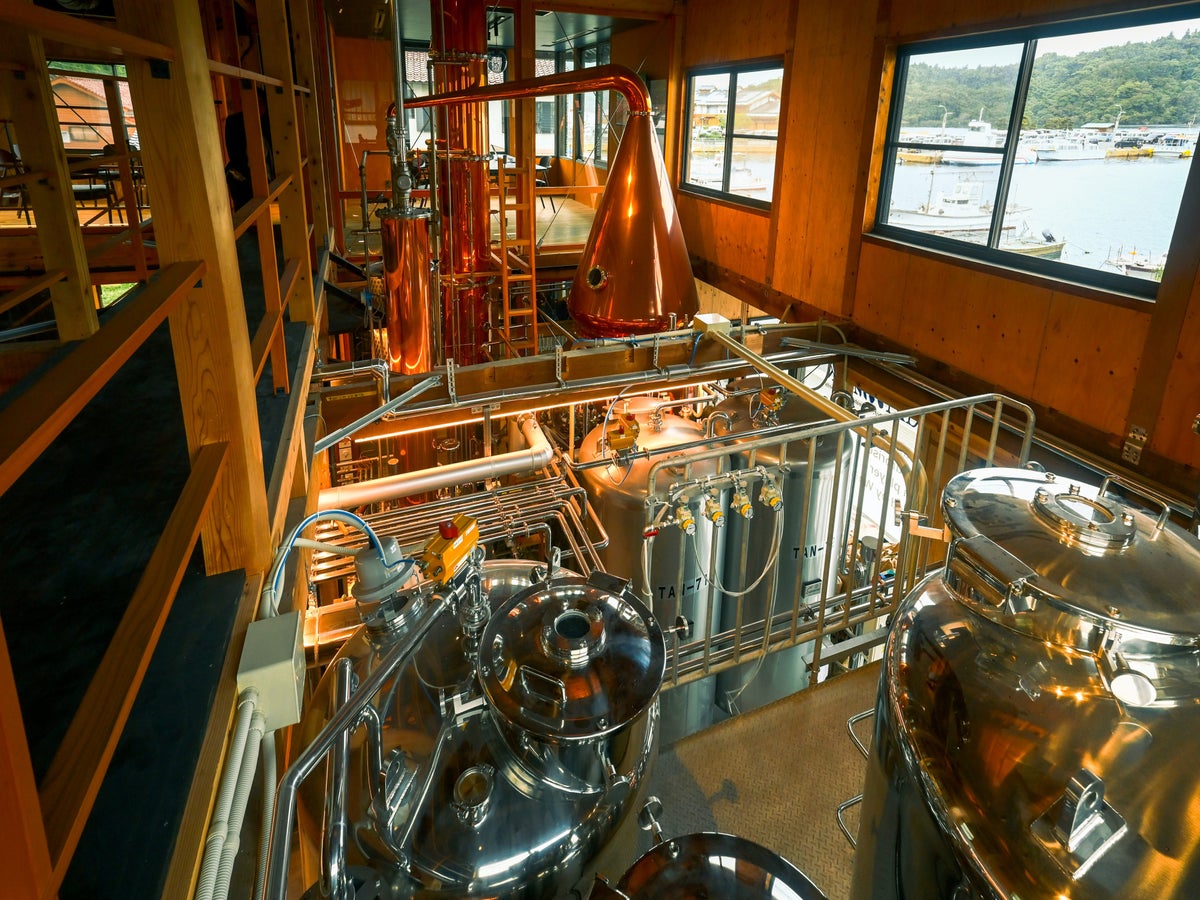
Because it had no distillery of its own, the gin was previously distilled at the group’s distillery in Mishima, Shizuoka Prefecture, even though it used island ingredients. Now, at Distillery Drift Mark, completed on the coast near Hishiura Port, it can be distilled on the island using water from the Amagawa river in Ama for the mash. The maker’s aim is to express Oki not only through ingredients but also through its water and land. The gin is 46% ABV, and its flavour is described as soft green aromas layered with the citrus notes of kuromoji and mandarin, finishing with a faint sweetness.
The year of production on the label: a vintage approach
The new label carries the production year, “2026”. Even with the same recipe and method, the flavour varies slightly with the condition of the raw materials, the year of harvest and that year’s weather. Rather than trying to iron this out as with a uniform industrial product, the maker wants people to enjoy it as an expression unique to each year, and began printing the year as the distillery started producing in-house. It brings an idea close to wine vintages to gin, and creates the pleasure of comparing one year with another.
Its awards are also worth noting. GodSpirits has won a gold medal at The Gin Masters 2025, a gold medal at the Feminalise Worldwide Competition 2026, and silver medals at both the Tokyo Whisky & Spirits Competition 2026 and the San Francisco World Spirits Competition 2026. Recognition at four international competitions, in London, France, Tokyo and San Francisco, is a striking achievement for a product from a small island distillery.
A small island distillery and its network
AMA Whiskey&Co. is a young company founded in Ama in June 2024. It opened Distillery Drift Mark as the first member distillery of the “Whiskey&Co. Brands Network”, a network of urban micro-distilleries run by Tokyo-based Whiskey&Co. Inc. The network aims to make bourbon-style whisky in Japan, and Drift Mark is also working on whisky alongside gin. The distillery has a café and bar attached, which also serve as a gathering place for residents and visitors. It is an attempt to place a distillery on a remote island of around 2,000 people and tie it to the revitalisation of the area.
The recommended retail price is 6,000 yen (tax included) for 700ml and 3,850 yen (tax included) for 375ml. It is being rolled out through the official online store, the shop at the distillery, retailers across Japan and other outlets.
For readers in Europe

No official import to the EU has been announced at present, but Japanese craft gin has been gaining a presence in European specialist shops and bars in recent years, so there is a good chance of finding it through importers and online shops that handle Japanese spirits. When searching, use names such as “GodSpirits”, “Gin from Ama” and “Distillery Drift Mark” as clues. If you do get hold of a bottle, first try it chilled and neat, or with a little water, to appreciate the forest-like aroma of kuromoji and the citrus of the mandarin. Then try it with tonic, where you may notice the slight saltiness from the seaweed and nigari adding depth to the gin and tonic. The labelled year is also a way to follow how this distillery develops from here. 2026 may prove a vintage worth looking back on, as “the year of the first distillation on the island”.
Sources
This article was written by The Sake Wire editorial team, summarising the public sources listed above. Images are our own.
Try Akita sake in the EU — from €6
180 ml tasting bottles and full-size sake, wine, beer and gin, shipped from Amsterdam within the EU.


