Kikumasamune launches 'Mare', a new series made with its own proprietary yeast
Kikumasamune Shuzo, a long-established Nada brewer, launched the junmai and honjozo of its new 'Mare' series, made with yeast it developed after years of research, in Japan on 5 October.
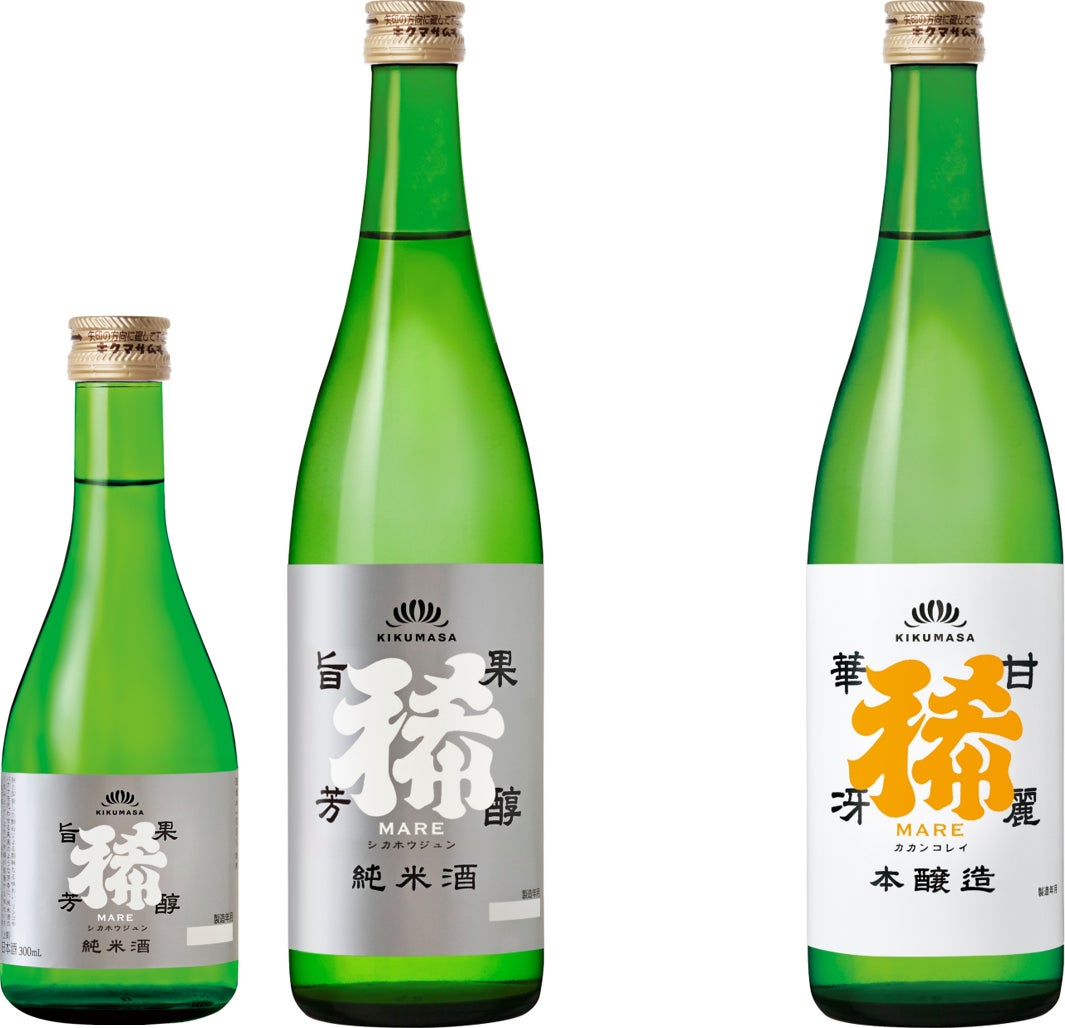
Yeast has a great influence on the aroma and flavour of sake. In Japan, many breweries use the ‘kyokai yeasts’ distributed by the Brewing Society of Japan, and it is common to choose from among the numbered strains. Against this backdrop, Kikumasamune Shuzo, headquartered in Higashinada Ward, Kobe, launched ‘Mare Junmai’ and ‘Mare Honjozo’, made with yeast developed in-house, on the Japanese domestic market on 5 October 2026. Higashinada Ward lies within the Nada region, long known for large-scale sake brewing.
The rare flavours that proprietary yeast creates
The product name ‘Mare’ (稀) is a word meaning ‘seldom seen’ or ‘rare’. The two bottles each use a different yeast developed by the company, which describes the flavour as one that can be achieved only with that yeast. Details of the yeast strains and how they were developed have not been published, but the significance of this launch lies in a major brewery sending the fruits of its research out across the country as a new series. The front of the label features the single character ‘Mare’ in large type, surrounded by an original four-character phrase created by the company to describe the flavour. The junmai carries ‘Umaka Hojun’ and the honjozo ‘Hanaama Saerei’. The former expresses umami, fruitiness and a rich aroma; the latter expresses elegance, sweetness, crispness and beauty.
Two contrasting personalities
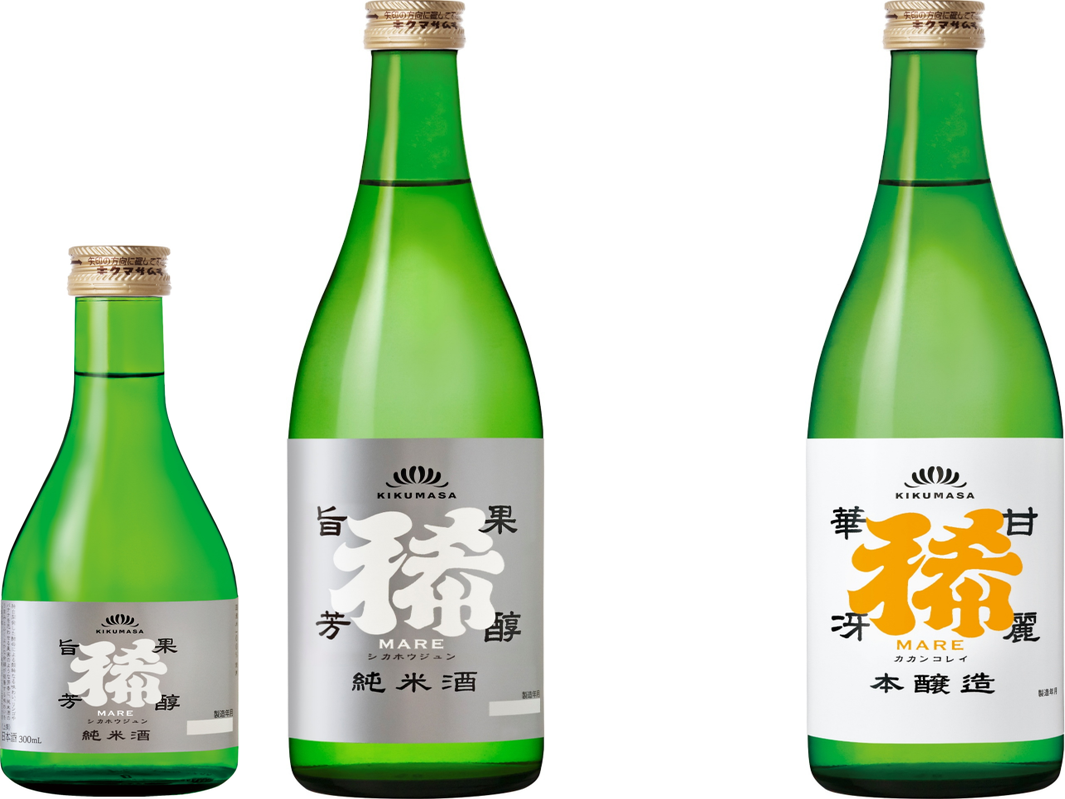
Junmai sake is sake brewed with only rice, rice koji and water. ‘Mare Junmai’ is said to offer a fruit-like aroma and the umami of rice, followed by a full, lingering finish. It has an alcohol content of 14% and a sake meter value (nihonshu-do) of -2.0, and the company labels it ‘slightly dry and slightly light’.
Honjozo is one of the premium categories known as tokutei meishoshu (special designation sake), made by adding a small amount of brewer’s alcohol (no more than 10% of the weight of the polished rice) to rice and rice koji. ‘Mare Honjozo’ is characterised by a flamboyant, juicy flavour like Kyoho grapes and a clean, crisp aftertaste. What catches the eye is its sake meter value of -30.0. The nihonshu-do is a guide to sweetness and dryness, with larger negative figures tending to indicate a sweeter sake. A value of -30 is quite extreme, and the label duly reads ‘sweet and rich’. The suggested retail price is 1,045 yen (excluding tax) for 720 ml for both, which places them in the everyday-sake price range.
How to enjoy it in Europe

So far, only sales within Japan have been announced, and no export plans have been disclosed. Even so, the fact that a major brewery has put its proprietary yeast front and centre deserves attention as a new trend in sake. If you get the chance to try them, comparing the two side by side is one way to enjoy them. ‘Mare Junmai’ is best lightly chilled, with mildly flavoured dishes such as white fish or chicken. ‘Mare Honjozo’ could be treated like a dessert wine: paired with blue cheese or a fruit tart, its grape-like sweetness may come into its own. When choosing sake, getting into the habit of checking the sake meter value and the yeast information on the back label may help you notice that even sakes from the same brewery head in different directions of flavour.
Sources
- PR TIMES(菊正宗酒造)「長年の研究から生まれた独自酵母による、類稀なる味わい『稀(まれ) 純米』『稀(まれ) 本醸造』新発売」
- SAKE Street「日本酒造りを支える「きょうかい酵母」とは - 日本醸造協会が頒布。主な酵母の特徴や番号の意味も解説!」
- SAKE Street「普通酒ってどんな日本酒?本醸造や純米酒との違いや楽しみ方を解説!」
This article was written by The Sake Wire editorial team, summarising the public sources listed above. Images are our own.
Try Akita sake in the EU — from €6
180 ml tasting bottles and full-size sake, wine, beer and gin, shipped from Amsterdam within the EU.


