Aramasa, Juyondai and Jikon: Rare Sake Tasting Flights in Tokyo
A Tokyo izakaya chain ran a tasting event of five hard-to-find sake brands, including Aramasa, Juyondai and Jikon, offering a glimpse of Japan's "rare sake" scene.
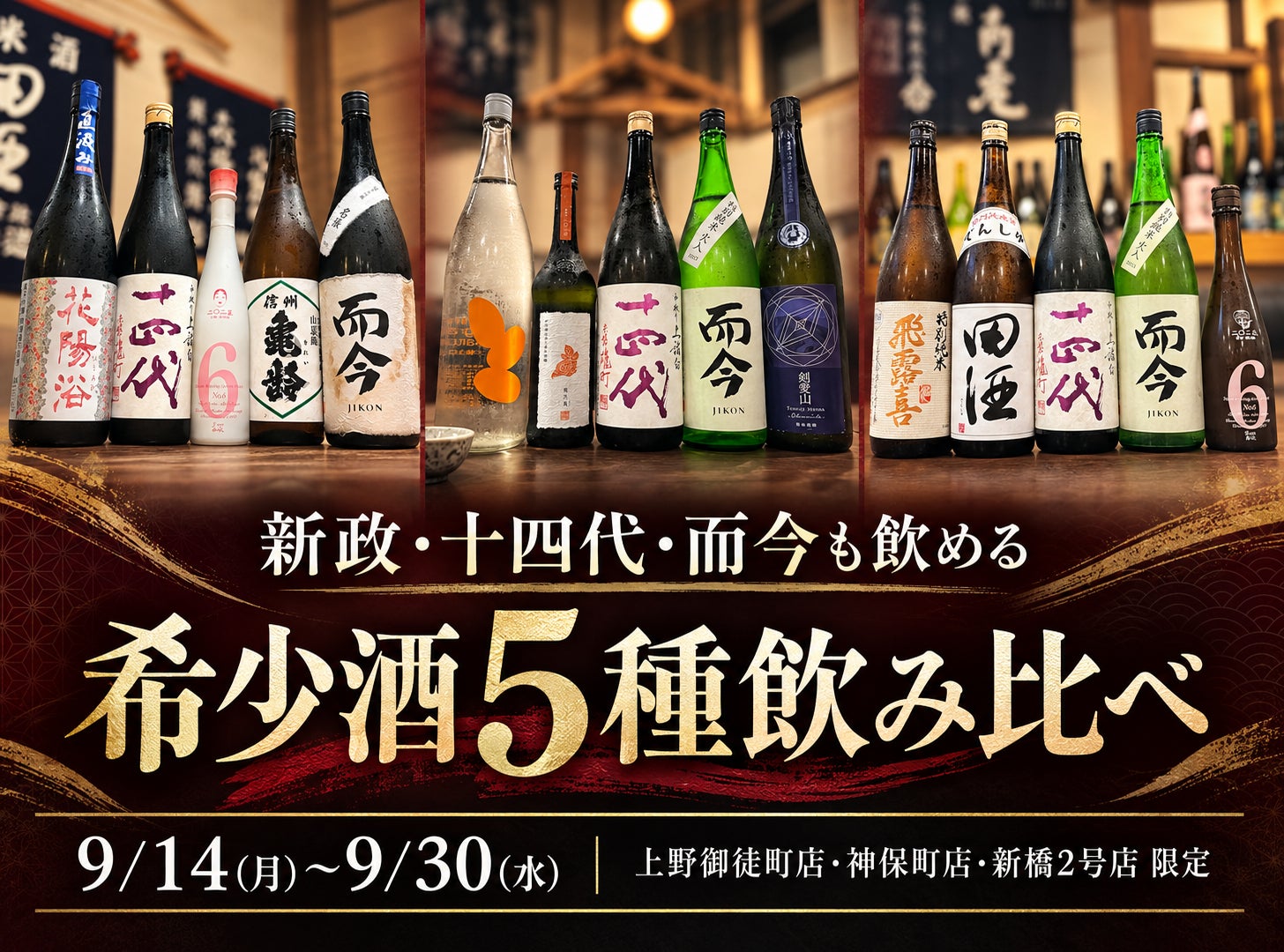
The Tokyo sake-specialist izakaya chain Nihonshu Genka Sakagura (operated by Billion Foods Co., Ltd.) ran a tasting plan of five rare brands at three outlets, Ueno-Okachimachi, Jimbocho and Shimbashi, from 14 to 30 September 2026. The line-up featured Juyondai, Jikon and Aramasa, brands that are said to be hard to buy even at list price within Japan. The event itself was limited to Tokyo, but it is an interesting example of how “phantom sake” is distributed and enjoyed in the Japanese market.
Why are they called “phantom” sakes?
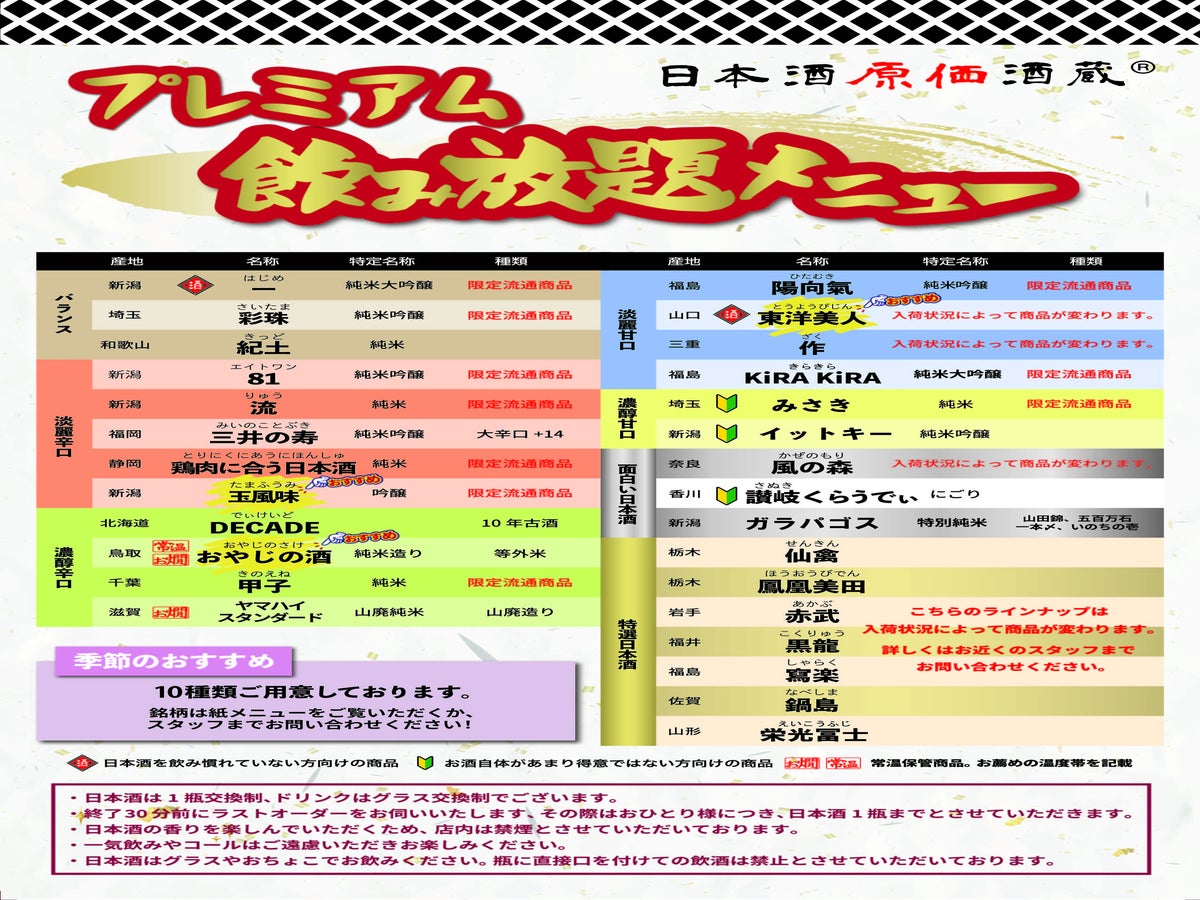
Juyondai is made by Takagi Shuzo in Yamagata Prefecture, Jikon by Kiyasho Shuzo in Mie Prefecture, and Aramasa by Aramasa Shuzo in Akita Prefecture in the north of Japan. All are produced in limited quantities and distributed by allocation through designated retailers known as tokuyakuten, so ordinary consumers have difficulty finding them in shops at all. For that reason, an event like this one, where an izakaya serves several rare brands at once in small glasses, was a valuable chance for Japanese enthusiasts too to simply try them.
A different line-up at each outlet
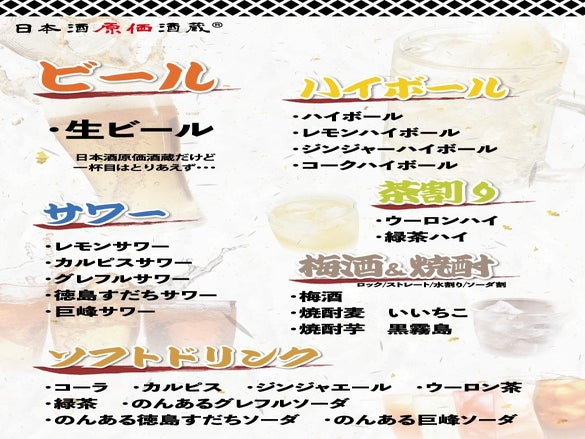
The Ueno-Okachimachi outlet lined up Juyondai in a junmai daiginjo specification, Aramasa Hinotori and Jikon Tokubetsu Junmai Hiire, along with Ominami and Kankiku. The Jimbocho outlet combined Juyondai and Jikon with Denshu, Hiroki and Aramasa No.6 R-type. Each serving was 50 ml (40 ml for Aramasa only) and came with 120 minutes of premium all-you-can-drink for 4,180 yen (tax included). The Shimbashi No.2 outlet offered a higher-tier plan at 7,260 yen (tax included), gathering Hanabiyoku THE MATCH, No.6 X-type, Jikon Nabari, Shinshu Kirei Junmai Ginjo and Juyondai Akaiwa Omachi Nakadori Jomoro. Each outlet was limited to the first 36 customers, open only to members of the shop app, with an order of at least two food dishes required.
As a note, “junmai” refers to sake made solely from rice, koji and water, while “daiginjo” refers to sake brewed with highly polished rice milled to 50% or less. Hinotori is a “kijoshu”, brewed by replacing part of the brewing water with sake, and is characterised by a sweet, rich flavour. No.6 is a series of unpasteurised sake named after the No.6 yeast discovered at Aramasa Shuzo, and it comes in different types such as R and X.
How European readers can enjoy them
Juyondai and Jikon rarely appear on shelves in Europe, so if you see them on a restaurant list, you can consider it a rare opportunity. Aramasa, on the other hand, is relatively easy to find even in European sake specialist shops. The unpasteurised No.6 series must be kept refrigerated, so it is best to buy it in good, fresh condition through a trusted importer or specialist shop. A kijoshu such as Hinotori shows its character when paired after a meal with cheese or dried fruit. And the format shown by this event, lining up several brands in 50 ml pours, can be recreated at home. Tasting a few bottles side by side in small glasses makes it easier to notice the differences made by rice polishing ratio, yeast and whether the sake has been pasteurised.
Sources
This article was written by The Sake Wire editorial team, summarising the public sources listed above. Images are our own.
Try Akita sake in the EU — from €6
180 ml tasting bottles and full-size sake, wine, beer and gin, shipped from Amsterdam within the EU.


